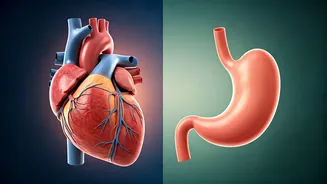







Gas Pain vs. Heart Pressure
Experiencing chest discomfort can trigger immediate worry, but not all pains signal a cardiac emergency. Gas or acidity can mimic serious symptoms, making
differentiation vital. Gas pain is typically described as sharp and burning; it may offer relief after burping, passing gas, or physical movement, often surfacing after meals. Conversely, heart-related pain usually manifests as a pressure or tightness in the chest, potentially radiating to the arm, jaw, or back. This cardiac discomfort tends to be persistent and may be accompanied by symptoms like profuse sweating, breathlessness, or nausea, as noted by medical professionals. Understanding these distinct sensations is the first step in assessing the cause of your chest pain.
Heart Problem Red Flags
Certain indicators strongly suggest that chest pain is linked to a heart issue and requires prompt medical intervention. Key warning signs include a squeezing or heavy sensation in the chest, pain that extends to the arm, jaw, neck, or back, and experiencing shortness of breath. Other critical red flags are sudden sweating, dizziness, and nausea. Such pains might persist for more than a few minutes, and their onset during physical activity or stress, with relief upon resting, could also point towards a cardiac problem. These symptoms should never be dismissed, especially for individuals with pre-existing health conditions.
When to Seek Aid
Distinguishing between benign gas pain and a potentially life-threatening heart event is crucial, and knowing when to seek immediate medical help can be life-saving. You should seek urgent assistance if your chest pain is severe, lasts longer than a few minutes, or if you experience shortness of breath. The presence of sudden sweating, fainting, nausea, or pain radiating to your arm or jaw are also urgent signals. It is especially important not to ignore unusual chest pain if you are older or have underlying health issues like diabetes or high blood pressure. Self-diagnosing can be risky; when in doubt, professional medical evaluation is always the safest course of action.