




When to Prune
Unlike many plants with strict seasonal pruning schedules, Pothos offers remarkable flexibility. You can enhance its fullness and vitality at any time,
making it a truly adaptable houseplant. The primary driver for pruning is often the natural elongation of its vines, which can lead to a sparser appearance. As stems lengthen significantly without producing many new leaves, trimming them back encourages the development of side shoots, resulting in a bushier, more voluminous plant. Gardening author Lisa Eldred Steinkopf advises that when stems become leggy and bare, it's the opportune moment for a trim. However, if you prefer the aesthetic of long, cascading vines, you can prune less frequently, as horticulturalist Justin Hancock from Costa Farms notes. Additionally, the appearance of yellowing leaves can serve as another signal that pruning is beneficial, helping to maintain the plant's vibrant coloration. Mason Muttart, a team lead at The Garden Place, emphasizes that consistent pruning plays a key role in preserving the plant's colorful appeal.
How to Prune
Pruning a Pothos is remarkably straightforward, arguably one of the simplest tasks among common houseplants. The key lies in using the correct tools and making precise cuts just above the leaf nodes. Justin Hancock recommends utilizing sharp implements like scissors or pruning shears for this task, advising to cut the stem directly above the point where a leaf emerges. It's crucial to ensure these tools are clean and disinfected prior to use to prevent the transmission of any diseases to the plant. Regarding the extent of pruning, it's generally best to avoid removing more than a quarter of the plant's total foliage in a single session, as per Hancock's advice. Excessive pruning can induce stress. Mason Muttart suggests targeting the leaf nodes—those small bumps along the stem where new growth originates—and making your cuts just above them. This technique promotes branching and denser growth. For an even fuller plant, Lisa Eldred Steinkopf suggests cutting stems back to about an inch from the soil line, which encourages robust branching from the base. An added benefit of pruning is that healthy cuttings with leaves can be effectively used to propagate new Pothos plants.
Achieving Glossy Leaves
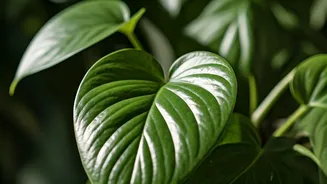
While pruning contributes to a healthier, greener Pothos, achieving that coveted glossy sheen requires a few extra steps. To make those leaves truly shine, start with simple cleaning. Gently dust the leaves with a soft duster or a microfiber cloth to remove any accumulated grime, allowing their natural gloss to become more apparent. For an enhanced, long-lasting shine, consider using neem oil. Apply a small amount to a microfiber glove and carefully rub each leaf, supporting its underside with your other hand to prevent damage. Alternatively, a commercial leaf shine spray can provide an instant, radiant gloss that maintains its luster over time. These simple treatments, combined with regular pruning and proper care, will ensure your Pothos leaves are not only healthy but also remarkably lustrous.
Growing Healthy Pothos
Cultivating a thriving Pothos involves providing the right environmental conditions and consistent care. Ensure your plant receives adequate light; variegated varieties might show yellowing leaves if light is insufficient, so move them closer to a window. The soil should remain consistently moist but not waterlogged, as Pothos can tolerate drying out to some extent, though prolonged dryness can lead to yellowing and leaf drop, as noted by Lisa Eldred Steinkopf. Regular fertilization is vital for lushness; use a balanced fertilizer, applying it once a month during winter and twice a month in other seasons, according to Mason Muttart. Pothos plants flourish in warmer temperatures, ideally between 70 and 90°F, and benefit from high humidity for optimal health. Adhering to these cultivation principles, alongside smart pruning, will guarantee a robust and vibrant Pothos specimen.