



Ancient Roots of Puppetry
Puppetry, a storytelling art form with a history stretching back millennia, has long held a significant place in India. Long before the advent of modern
entertainment, puppets were the travelling storytellers, bringing epics, myths, and moral lessons to village audiences. This ancient practice seamlessly integrated folklore, music, intricate craftsmanship, and even social critique, establishing itself as a potent cultural force. Archaeological and textual evidence suggests its origins are incredibly deep, with mentions appearing in ancient Indian epics like the Mahabharata and early Sanskrit literature. Scholars estimate the art form's lineage could extend over 2,000 years, developing in tandem with sacred temple performances and the oral narrative traditions that were prevalent throughout the subcontinent.
Kathputli of Rajasthan
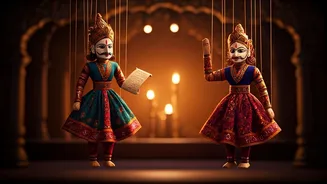
Among the most celebrated forms of Indian puppetry is Kathputli, hailing from the vibrant state of Rajasthan. These distinct string puppets, crafted from wood, are renowned for their dynamic movements and the dazzling colours of their traditional attire. Performances typically draw inspiration from regal legends and beloved folk tales, bringing historical narratives and heroic characters to life with dramatic flair. The manipulation of these colourful figures allows for expressive storytelling, captivating audiences with tales of bravery, romance, and the rich cultural heritage of Rajasthan. Kathputli is not just a performance; it's a visual spectacle rooted in the region's storied past.
A Voice for Social Change
Beyond its role in recounting mythological tales, puppetry evolved into a powerful instrument for social reform and political discourse, particularly during the challenging period of colonial rule. Performers adeptly employed satire and allegorical narratives to address pressing societal issues, encourage literacy, and raise awareness about public health concerns. Through cleverly crafted dialogues and character interactions, puppeteers could subtly critique authority and advocate for change without direct confrontation. This made puppetry an accessible and engaging medium for disseminating important messages across communities, demonstrating its versatility as both an art form and a tool for social consciousness.
Shadow Puppetry Traditions
Southern India boasts a distinguished lineage of shadow puppetry, often performed within the sacred precincts of temples. One prominent example is Tholu Bommalata from Andhra Pradesh. This captivating form utilises large, semi-transparent leather puppets, meticulously cut and painted. When illuminated from behind, these puppets cast intricate shadows onto a screen, creating vivid and dramatic visual narratives. Performances frequently draw from the grand tales of the Ramayana, bringing epic battles and divine characters to life through the ethereal dance of shadows. The artistry lies in the detailed manipulation of the puppets to convey a wide range of emotions and actions.
Rod and Glove Puppetry
Diverse puppetry styles flourish in other regions of India as well. In West Bengal, the art of Putul Nach showcases rod puppetry, where substantial puppets are skilfully controlled via rods attached to their heads and limbs, allowing for impressive scale and movement. Simultaneously, glove puppetry traditions, prevalent in states like Kerala and Odisha, employ smaller, more intimate puppets. These hand-controlled characters are brought to life through the nimble dexterity of the puppeteer's hand, enabling a nuanced and expressive portrayal of characters and their interactions, highlighting the variety in scale and manipulation techniques across India.
Puppetry in Modern Times
The legacy of Indian puppetry continues to thrive in contemporary times, finding expression through vibrant festivals, engaging educational theatre, and dedicated cultural preservation initiatives. Esteemed organisations like the Sangeet Natak Akademi play a crucial role in supporting traditional puppeteers and safeguarding their invaluable art. Furthermore, a new generation of contemporary puppeteers is emerging, boldly experimenting with modern themes, innovative storytelling techniques, and the integration of multimedia technologies. This blend of tradition and innovation ensures that puppetry remains a dynamic and relevant art form, captivating new audiences while honouring its rich historical roots.