







Seamless Highway Journeys
The Indian government, through its Ministry of Road Transport and Highways (MoRTH), is spearheading a significant transformation in how we navigate national
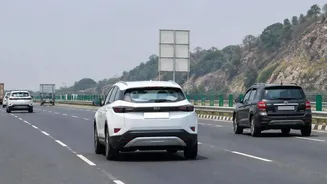
highways. The centerpiece of this evolution is the Multi-lane Free Flow (MLFF) tolling system, designed to completely do away with traditional toll plazas. Imagine driving across the country without ever needing to slow down or stop to pay tolls. This groundbreaking approach aims to create an uninterrupted flow of traffic, making long-distance travel considerably more efficient and less of a hassle for millions of commuters. By removing these physical bottlenecks, the MLFF system is poised to redefine the entire experience of highway transit, focusing on speed, convenience, and a smoother overall journey for all road users across India.
Tech Behind the Flow
At the heart of the MLFF system lies a sophisticated integration of multiple advanced technologies, working in concert to precisely identify and אשר vehicles. Every vehicle participating in this new system will be equipped with a Radio Frequency Identification (RFID) tag, a small device containing crucial data like the vehicle’s registration number and associated toll payment account. Complementing this are Automatic Number Plate Recognition (ANPR) cameras. These intelligent cameras are designed to capture high-resolution images of vehicle license plates, utilizing advanced optical character recognition (OCR) to accurately read the registration numbers. Furthermore, the Global Navigation Satellite System (GNSS) plays a pivotal role by continuously monitoring the precise location of each vehicle. This allows the system to determine exactly which toll roads have been traversed, ensuring accurate billing. This multi-layered technological framework ensures that every vehicle is accounted for without the need for manual intervention or physical stops.
Automated Toll Deductions
The operational elegance of the MLFF system becomes apparent as a vehicle approaches a designated tolling point. The integrated technology springs into action, automatically detecting the vehicle's presence and its unique RFID tag. Upon successful identification, the pre-determined toll amount is seamlessly deducted from the vehicle's linked account, allowing for an immediate and unimpeded passage. For those vehicles that may not be fitted with an RFID tag, or if the tag fails to register, the ANPR cameras swiftly step in. They capture the license plate image, and the OCR technology extracts the registration number. This information is then used to identify the vehicle owner’s details, and the corresponding toll charge is levied against their account. This dual approach ensures comprehensive coverage and minimizes the possibility of toll evasion, streamlining the entire payment process.
Transformative Road Benefits
The widespread adoption of the MLFF system promises a cascade of significant advantages for India's highway infrastructure and its users. Foremost among these is a dramatic reduction in traffic congestion. By eliminating the physical constraints of toll plazas, vehicles can maintain their speed, leading to significantly faster travel times and a more pleasant commuting experience. This also contributes to enhanced road safety, as the risk of accidents often associated with braking and merging at toll booths is substantially mitigated. Beyond driver benefits, the MLFF system is anticipated to bolster revenue for toll operators. The increased efficiency and reduced scope for toll evasion are projected to lead to greater financial returns, supporting further development and maintenance of the nation's road network. This holistic improvement underscores the transformative potential of the new tolling paradigm.
Nationwide Rollout Plans
Currently, the innovative MLFF tolling system is undergoing rigorous testing and implementation through pilot projects on select stretches of highways across India. These initial trials are crucial for fine-tuning the technology, assessing its performance under real-world conditions, and gathering valuable feedback. The success of these pilot programs will pave the way for a much broader, nationwide rollout. The government has ambitious plans to gradually expand the MLFF system to cover a significant portion of the country's expressways and national highways in the coming years. This phased approach will allow for a smooth transition, ensuring that all stakeholders are adequately prepared for the shift to this advanced, barrier-free tolling regime, ultimately enhancing the efficiency and convenience of inter-state travel.