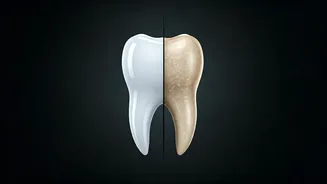







Teeth: A New Class Divide
Teeth are increasingly serving as a visible marker of class disparity, demonstrating how systemic disadvantages manifest physically long before they gain
official recognition. Dental well-being now stands at the nexus of socioeconomic status, public policy, and social stigma, leading to an ever-expanding gulf between those who can afford consistent dental attention and those who are excluded. Journalist Sarah Smarsh highlighted the notion of 'poor teeth,' noting how they are often unfairly attributed to individual habits, thus subjecting the impoverished to undue shame. This shame, in turn, perpetuates further disadvantage, as individuals with compromised dental health face greater obstacles in securing employment and other life opportunities. This situation is amplified today, with the cultural prevalence of 'whitened, straightened, veneered smiles' creating an even more pronounced contrast.
An Excluded System
Australia's persistent dental care deficit is a long-standing issue. A critical decision made during the establishment of Medicare's predecessor in the 1970s was the explicit exclusion of dental services, a choice with enduring consequences for public health outcomes. While public support saw a modest expansion in 2014 with the Child Dental Benefits Schedule, offering eligible children access to free care at numerous private practices, the broader problem persists. During the 2025 federal election cycle, advocacy for integrating 'Dental into Medicare' by the Greens sparked crucial national dialogue concerning the prohibitive cost of dental treatments and the individuals who are consequently underserved. However, the Grattan Institute issued a sobering warning in 2024: over two million Australians are avoiding dental visits due to affordability issues, and more than 40% of adults endure waits exceeding a year to receive care. Peter Breadon, the institute's health program director, has emphasized that the public dental system is critically 'underfunded' and 'overwhelmed.'
Years of Waiting
Statistics from July 2025 indicate that approximately one-third of Australians are eligible for public dental services, which are either free or offered at a low cost. These essential services depend on federal funding but are administered by individual states and territories. However, access is far from assured, with data obtained by the ABC revealing that wait times in certain areas can extend for years. Dental issues left untreated frequently escalate into medical emergencies, necessitating hospital visits for patients or, in more tragic circumstances, leaving individuals to endure severe pain without assistance. A compelling account from the United Kingdom starkly illustrates these dire consequences. A recent publication detailing deaths linked to the UK's stringent 'work capability assessment' features the distressing case of a 57-year-old man whose family discovered two large molars and a pair of pliers in a shoebox in his cupboard, suggesting a desperate, self-inflicted attempt to alleviate his dental suffering.
Personal Stories Matter
Narratives concerning dental inequality predominantly originate from individuals who have directly experienced these struggles. Linda Tirado's 2014 book, 'Hand to Mouth,' emerged from a viral online post responding to the question of why impoverished individuals engage in seemingly self-destructive behaviors. Tirado's writing, characterized by its raw honesty, sharp wit, and dark humor, vividly portrays the realities of low-wage employment, single parenting on the brink of poverty, and the daily compromises necessitated by survival. The book's title itself alludes to the precariousness of daily existence and the instinctual gesture of covering one's mouth to conceal damaged teeth. Barbara Ehrenreich, who penned the foreword, hailed Tirado's account as the authentic perspective on poverty that she had endeavored to capture in 'Nickel and Dimed.' Ehrenreich expressed her long anticipation for such a book, ultimately deferring to Tirado's superior ability to articulate these experiences. This shift from external reportage to direct personal testimony is a growing trend, facilitated by digital platforms that empower individuals living in poverty to bypass traditional gatekeepers and share their own stories, shedding light on local hardships and systemic failings.
Symbolic Teeth in Storytelling
This evolution of personal narrative is also evident in 'Povo,' a 2024 collection featuring authors from Western Sydney who developed their work through the Sweatshop Literacy Movement. One particularly striking piece focuses on tooth gems, described with the line, 'Plot twist! Got them at a salon… right after Mum and Dad kicked me out. Four of them. Two on the top canines. Two on each incisor. Crystal Swarovski. USD 150 all up. Each gem will help me manifest my dreams.' The narrator's sparkling gems stand in stark contrast to the surrounding difficulties, powerfully illustrating how dental adornments can carry significant personal, cultural, and economic meaning. During a protest in 2023 outside Prime Minister Anthony Albanese's electorate office, speakers receiving JobSeeker and the Disability Support Pension shared their experiences of living on payments that remained below the poverty line. One recipient, a woman likely in her late fifties or early sixties, recounted dedicating two days each week to hand-weeding in bushland to fulfill 'mutual obligation' requirements for her welfare payments. Her handwritten sign declared, 'welfare not warfare.' In the photograph taken that day, her mouth is closed, hiding her chipped teeth, which silently narrated a story of hardship.