





When to Watch
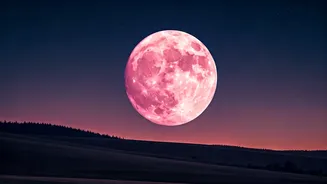
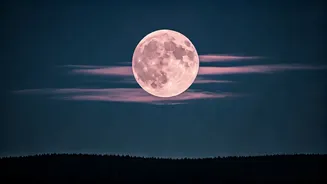
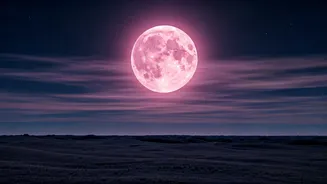
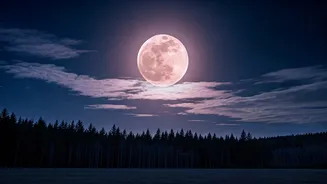
Skygazers are in for a treat as the first full moon of spring, affectionately known as the 'Pink Moon,' is set to reach its brightest point on April 2nd.
While the peak illumination occurs in the early hours of Thursday, April 2nd, the evening prior, Wednesday, April 1st, offers a more dramatic spectacle. As the moon begins to ascend above the horizon just after sunset, you'll have the prime opportunity to witness its majestic rise. This timing is crucial for capturing the most breathtaking views of this monthly lunar event, making that evening the absolute best window for observation before it reaches its zenith.
The Pink Moon Myth
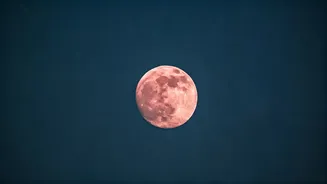
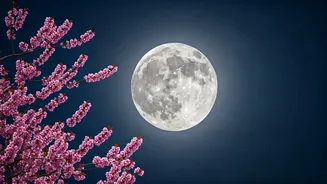
Contrary to its evocative name, the 'Pink Moon' won't actually appear in vibrant shades of pink. This celestial moniker stems from historical traditions, particularly among early Native American tribes. These communities meticulously tracked the progression of seasons by observing the lunar cycle, naming each full moon after significant natural phenomena. The April full moon was named 'Pink Moon' in honor of the abundant wild ground phlox, a delicate wildflower whose carpets of pink blossoms signal the true arrival of spring. Therefore, the name is a nod to nature's reawakening rather than the moon's actual color.
Why It Glows Warm
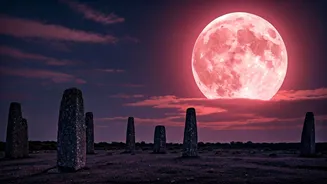
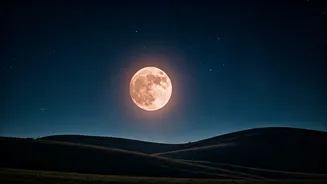
The moon's often observed warm, orange, or golden hue isn't a result of its composition but rather a fascinating optical illusion caused by Earth's atmosphere. When the moon is low on the horizon, the light reflecting off its surface must traverse a significantly greater distance through our atmosphere to reach our eyes. During this extended journey, atmospheric particles effectively scatter away the shorter, bluer wavelengths of light. The longer wavelengths, which include reds, oranges, and yellows, are less affected and manage to penetrate the atmospheric barrier. This selective scattering is precisely what imbues the rising moon with its beautiful, warm, coppery tint, mirroring the same phenomenon that creates vibrant sunsets.
A Starry Companion
This month's lunar display is accompanied by an exceptional celestial bonus for those with keen eyes and a penchant for astronomy. Positioned in close proximity to the radiant full moon, you'll notice an exceptionally bright point of light. This isn't just any star; it's Spica, a brilliant binary star system nestled within the Virgo constellation. The striking juxtaposition of the luminous full moon alongside the dazzling Spica creates a particularly dynamic and visually appealing tableau in the night sky, offering an enhanced viewing experience for amateur astronomers and casual observers alike.
Holiday Calendar Connection
Beyond its aesthetic appeal, the April Pink Moon carries significant cultural and religious importance, acting as a key marker for the timing of major observances. Its lunar phase directly influences the dates for both Easter and Passover. The ancient rule dictates that Easter is celebrated on the first Sunday following the first full moon that occurs after the spring equinox. Given that the astronomical spring equinox fell on March 20th this year, this particular April full moon serves as the critical trigger, definitively setting the dates for the upcoming Easter holiday weekend for millions worldwide.
Weather Outlook
The clarity of the Pink Moon's appearance is, as with any celestial event, subject to the whims of the weather. For observers in the UK, the forecast presents a mixed outlook. Those in England and Wales may encounter difficulties due to anticipated heavy cloud cover and scattered rain showers on Wednesday night, potentially obscuring the view. Conversely, regions in Scotland and Northern Ireland are expected to experience colder air masses, offering a higher probability of clear skies and uninterrupted viewing opportunities. Regardless of the visibility, taking a moment to step outside on Wednesday night is encouraged to appreciate the awakening spring sky.