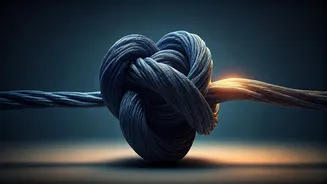







The Variable Reward Trap
One of the primary reasons it's so challenging to disengage from a long-term relationship, even a rocky one, lies in a phenomenon known as intermittent
reinforcement. This principle, similar to how slot machines or gambling addiction works, involves unpredictable positive outcomes. When a relationship offers occasional good moments interspersed with periods of difficulty, your brain becomes wired to chase those highs, constantly hoping for the return of the better times. This creates a cycle of anticipation and reward, driven by dopamine spikes, making the relationship feel addictive. Unlike consistent, predictable interactions which might make leaving easier, the variability in a relationship keeps hope alive and makes it harder to let go, much like how persistent bad habits resurface because of occasional positive feedback.
Our Brains Fear Separation
From an evolutionary and neuroscientific perspective, human beings are fundamentally wired for connection and belonging. When a long-term partner is no longer present, attachment theory suggests that the brain regions activated are akin to those that signal physical pain. This is interpreted by our nervous system as a survival threat, triggering a panic response that urges us to stay connected for safety. This deep-seated biological imperative, a remnant of our tribal past, floods us with fear when separation is contemplated. The body’s rebellion against breaking up is a powerful biological signal, and understanding this reaction is the first step to managing it, often through conscious effort like mindful breathing, journaling, or seeking professional guidance to navigate the distress.
Identity Fusion and Sunk Costs
Over extended periods, partners in long-term relationships often develop a profound sense of shared identity. Research indicates that individuals begin to integrate their partner into their self-concept, meaning the other person becomes a fundamental part of who they are. Consequently, ending such a relationship can feel like losing a vital part of oneself, akin to losing a limb, rather than simply parting ways with another individual. This fusion extends to shared routines, inside jokes, and intertwined future aspirations, all of which contribute to a stable sense of self. The psychological principle of the sunk cost fallacy also plays a significant role, leading individuals to believe that they have invested too much time, effort, and emotional capital to simply walk away. Overcoming this requires recognizing that personal growth often necessitates shedding old aspects of oneself, even if the process is painful.
The Illusion of Eternal Pain
A common mental trap people fall into when considering a breakup is catastrophizing, where they overestimate the duration and intensity of their future suffering. Studies reveal that our brains possess a negativity bias, which amplifies worst-case scenarios and the 'what ifs' associated with ending a relationship. We tend to believe that the devastation will be permanent. However, in reality, individuals often rebound much faster than they anticipate. Reflecting on past challenges and how they were overcome can provide valuable perspective. Reframing the situation—viewing short-term heartache as a necessary trade-off for long-term peace and well-being—is crucial. Support from friends or therapy can provide grounding and help counteract this cognitive distortion.
The Oxytocin Withdrawal
Oxytocin, often referred to as the 'love hormone,' is released through physical intimacy, shared experiences, and emotional connection, building deep bonds over years of a relationship. When a long-term relationship ends, the sudden absence of these bonding stimuli can feel like going 'cold turkey' from a powerful neurochemical high. This hormone, produced by the hypothalamus, is instrumental in creating profound attachment, and its withdrawal can lead to intense cravings, feelings of loneliness, and even physical discomfort. The continuous proximity and touch that once reinforced these bonds now contribute to the pain of separation. Combatting this withdrawal involves actively engaging in self-care, such as exercise, which releases endorphins, and seeking platonic touch to help recalibrate the body's neurochemistry and facilitate the formation of new, healthy connections over time.