

The Silent Contamination
The allure of trying out the latest shades at the beauty counter is undeniable, often seen as a harmless part of the shopping experience. However, this
seemingly innocent practice can lead to significant health consequences. A widely shared incident involved a woman contracting the Herpes Simplex Virus (HSV-1) directly from a communal lipstick tester, which escalated to a lawsuit. While the price of luxury cosmetics is a common concern, the potential for acquiring a lifelong viral infection from these shared products is a far greater and often overlooked cost. It's crucial to understand that these testers are not just conduits for trying out products but can act as reservoirs for a multitude of pathogens, transforming what seems like a simple swatch into a serious health risk.
Germs on the Counter
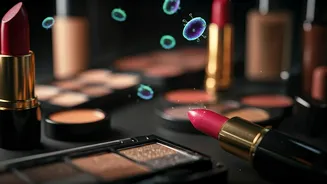
The notion that beauty testers are a breeding ground for germs is far from an urban myth; it's a well-established scientific reality. Dermatologists and microbiologists consistently warn about the resilience of viruses and bacteria on cosmetic surfaces. The Herpes Simplex Virus, for instance, can endure on moist textures like creamy lipsticks or damp mascara wands for extended periods, waiting for a new host. Studies have revealed that a staggering 70% to 90% of used makeup products, including those offered as testers, are contaminated with bacteria such as E. coli and Staphylococcus. Even if a tester appears visually clean, it could harbor viruses or bacteria from a previous user who was asymptomatic but still infectious. In a retail setting where hundreds of individuals interact with the same products daily, the likelihood of cross-contamination reaching nearly 100% is a significant concern.
Protecting Yourself
Navigating the beauty aisle without compromising your health requires a few smart strategies. A simple yet effective method is the 'hand hack': always test makeup by applying it to the back of your hand and then immediately sanitizing the area. This bypasses direct contact with your face and minimizes exposure. Insist on the use of disposable applicators; if a store doesn't provide single-use wands or readily available alcohol sprays to sanitize product surfaces, it's best to refrain from using their testers. Another precaution is the 'top layer' rule: if you absolutely must use a tester, ask a sales associate to scrape off the uppermost layer of the product with a sterile spatula first. Finally, make it a habit to carry your own hand sanitizer and use it promptly after leaving the makeup section to eliminate any potential lingering germs.