
Planting Timing Secrets
Radishes are exceptionally fast-growing, cool-season vegetables that can be sown as seeds directly into the soil. For spring harvests, planting can commence
as soon as the ground is workable, ideally between four to six weeks before the last expected frost. Regions with extended, mild springs benefit from succession planting, where new seeds are sown every two weeks throughout early to late spring, ensuring a continuous supply. This crop can also be cultivated as a fall vegetable; in this case, sow seeds four to six weeks prior to the first frost in your area. Specialized winter varieties require a longer maturation period but possess the resilience to withstand light frosts and endure temperatures dipping as low as 20°F. Be mindful that radishes are prone to bolting, a process where they prematurely flower and produce seeds, typically triggered by consistent air temperatures exceeding 70°F. This phenomenon renders the roots tough, spongy, and unpalatable. In climates with hot summers and no frost, radishes are often grown as a winter crop.
Germination and Growth
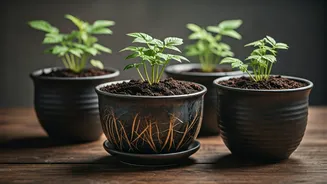
Radish seeds demonstrate a broad germination temperature range, sprouting effectively in soil as cool as 40°F and as warm as 85°F. However, the optimal temperature range for uniform and high-quality plant development lies between 55°F and 65°F. Under these ideal conditions, seeds typically emerge within three to four days, although some varieties might take up to 10 days. If planted in soil at 40°F, germination can be significantly delayed, sometimes taking as long as 20 days. Radishes begin to form their characteristic bulbs in cooler weather, thriving best in temperatures between 50°F and 65°F. Precise timing is crucial, especially in areas with short spring seasons or fluctuating temperatures. Selecting varieties recommended for your specific growing zone and planting seeds as early as the soil can be worked will contribute to more successful harvests. While starting radish seeds indoors is possible, it’s rarely practiced because, similar to most root crops, they do not transplant well. If attempting indoor starts, seedlings must be transplanted outdoors very young, at the two to four true-leaf stage, and handled with extreme care to avoid disturbing their delicate root systems. High seedling mortality rates are not uncommon when transplanting.
Maturity Timelines Explained
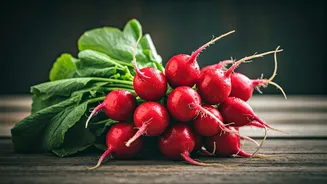
Radishes are renowned for their rapid maturation. Popular round varieties, such as Cherrybelle, French Breakfast, and Easter Egg, are typically ready for harvest within a swift 24 to 30 days after sowing. In contrast, Daikon radishes, characterized by their long, white, and mildly flavored roots that can reach up to a foot in length and 3 inches in diameter, require a longer growing period of 50 to 70 days. Daikon types are particularly well-suited to heavier soils and can actually improve soil structure by penetrating deeply, thereby enhancing aeration and texture. Watermelon radishes, a larger, sweet, ball-shaped variety, mature in approximately 60 to 65 days, reaching about 4 inches in diameter. Because of their quick germination, radishes serve excellently as companion plants, interplanted with slower-germinating crops like carrots. Their rapid emergence helps to clearly mark the rows, and they are harvested early, leaving ample space for the carrots to develop. The fast-maturing, ball-type radishes are also highly suitable for cultivation in containers.
Harvesting for Peak Quality
Begin checking standard, ball-type radishes approximately three weeks post-sowing. A primary indicator of readiness is when the 'shoulders,' the uppermost part of the root, become visible just above the soil surface. Alternatively, gently brush away soil at the base of the plant to feel the top of the radish. For most varieties, it should be about 1 inch in diameter, with Watermelon radishes being an exception, requiring a larger size. The plants themselves should display robust, green tops measuring between 6 to 8 inches in length. For root-type Daikon radishes, a similar inspection process applies. Look for shoulders that emerge 2 to 3 inches above the ground, signaling maturity. The leaves should be around 8 inches long, and the root's top should feel approximately 2 to 4 inches in diameter. Daikon varieties typically reach harvest maturity in 50 to 70 days. Radish greens are also edible and can be harvested when they reach about 2 inches tall. Snip them off at ground level, leaving 2 to 3 inches between remaining seedlings, and use them in salads or recipes with other leafy greens for a pungent, peppery flavor reminiscent of arugula. The development of a thick, central stalk signifies the plant is bolting; at this stage, the root will not develop further, and the leaves will turn bitter and tough. Bolted radishes are inedible and best suited for composting. If a few plants start to bolt, it's wise to check the rest of your crop, as they might be ready for harvest. Harvesting radishes promptly once they reach their appropriate size is key to preventing them from splitting, a condition that exposes the inner flesh to damage.