

Holi's Date Dilemma
As the vibrant festival of Holi approaches each year, a common point of discussion arises concerning its exact celebration date. For 2026, this delightful
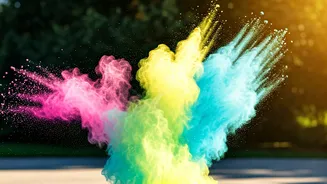
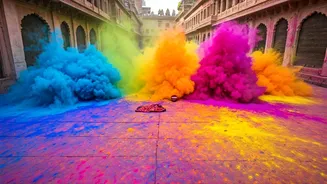
ambiguity persists, with the question lingering: is Holi observed on March 3rd or March 4th? This uncertainty often extends to the significant ritual of Holika Dahan, the ceremonial bonfire that precedes the main festivities. Holi, celebrated in the Hindu month of Falgun, marks the joyous arrival of spring and is renowned for its spectacular display of colours. More than just a festival of throwing gulal and vibrant powders, Holi embodies a spirit of uninhibited joy, a chance to reconnect with one's inner child, and a powerful occasion to let go of past grievances and foster unity. It's a time when the barriers of age and social standing dissolve in a cascade of colour and laughter, making it one of India's most cherished celebrations.
Ancient Roots & Legends
The origins of Holi are deeply intertwined with ancient Indian traditions, believed by many to have begun as simple spring fire rituals during the Vedic era. Early scriptures, such as the Rigveda, mention "Holaka," which referred to purification bonfires lit during Phalguna (the period between February and March). These fires were central to celebrating harvest, warding off the negative influences of winter, and welcoming the rejuvenating spirit of spring. Initially, these were not the comprehensive festival we know today but rather agrarian communities performing rites for renewal. Over time, particularly during the Puranic period, the festival gained rich narrative layers. A pivotal story involves Prahlad, the son of the demon king Hiranyakashipu. Prahlad's unwavering devotion to Lord Vishnu defied his father's decree, leading his aunt, Holika, who possessed a boon of fire immunity, to attempt to immolate Prahlad. However, it was Holika who perished in the flames, a testament to divine justice, thus giving rise to the tradition of Holika Dahan. Further embellishing Holi's lore are the playful escapades of Lord Krishna, whose joyous celebrations inspired numerous folk tales that are now integral to the festival's spirit.
Regional Flair & Customs
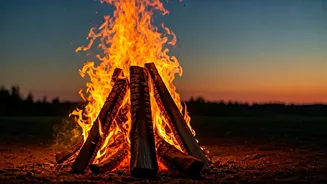
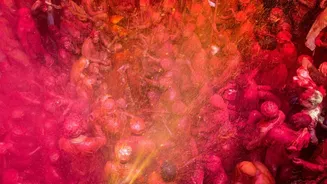
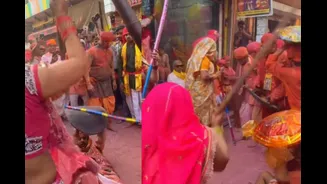
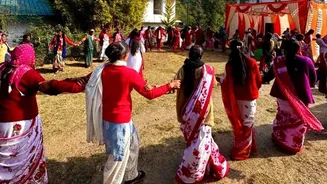
Holi, while celebrated with a unified spirit across India, showcases a captivating diversity in its regional expressions. From the rice-flinging "Basanta Utsav" observed in Bengal, symbolizing the arrival of spring with a unique fervor, to the boisterous "Lathmar Holi" in Braj where women playfully strike men with sticks, each region adds its distinct cultural flavour. Despite these variations, the core celebrations typically commence with Holika Dahan, a day preceding the main Holi festivities. During Holika Dahan, a bonfire is ceremoniously lit, and offerings such as ghee, cow dung cakes, and coconuts are made, accompanied by prayers for familial protection. The following day, the festival of colours erupts. Celebrations often begin at home with the playful application of colours on idols of deities, followed by offering 'prasad' to family gods. Subsequently, people venture out to share the colourful merriment with friends and relatives. As evening descends, many communities gather, exchange blessings, foster goodwill, and share delectable festive cuisine, reinforcing the bonds of togetherness.
Navigating 2026 Dates
For the year 2026, Holi will be observed on Wednesday, March 4th, with the preceding ritual of Holika Dahan taking place on Tuesday, March 3rd. To precisely pinpoint the auspicious timings, we look at the lunar calendar. The Purnima Tithi, or the full moon period, commences at 05:55 PM on March 2nd and concludes at 05:07 PM on March 3rd. The most significant Holika Dahan Muhurta, the astrologically favorable time for the bonfire, is scheduled from 06:22 PM to 08:50 PM on March 3rd, offering a duration of 2 hours and 28 minutes for this sacred rite. It's also important to note the presence of Bhadra, an inauspicious period, which is divided into Bhadra Punchha from 01:25 AM to 02:35 AM and Bhadra Mukha from 02:35 AM to 04:30 AM on March 3rd. As per Hindu scriptures and traditions, Holika Dahan, also known as Holika Deepak or Chhoti Holi, should ideally be performed during Pradosh Kaal, which begins after sunset, while the Purnimasi Tithi is still prevalent. Crucially, all auspicious activities are advised to be avoided during the Bhadra period. In 2026, Holika Dahan will occur during Pradosh Kaal, aligning with the Purnima Tithi, and before the Udaya Vyapini Purnima that extends into the next day.