




FTA: The Basics
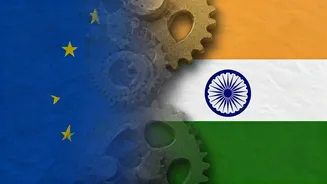
The India-EU Free Trade Agreement (FTA) is a comprehensive agreement designed to foster deeper economic and strategic ties. Its primary goals are to increase
trade, enhance security cooperation, and strengthen the overall strategic partnership between India and the European Union. This deal is significant not just for the two entities involved, but also because it sets a precedent for future trade relations on a global level. The FTA encompasses a wide range of areas, including goods, services, investment, and intellectual property rights, making it a multifaceted agreement. It is often described as the 'mother of all deals' due to its potential to transform the economic landscape for both India and the EU. By reducing trade barriers and promoting collaboration, the FTA aims to create new opportunities for businesses and consumers alike, leading to increased economic growth and development. The agreement also provides a framework for addressing shared challenges and promoting stability in a rapidly evolving world.
Benefits for India
The India-EU FTA offers numerous advantages for India. One of the main benefits is increased market access for Indian goods and services within the EU. This means easier entry for Indian products, leading to higher export volumes and revenue. The agreement is also expected to attract more foreign investment into India, boosting economic growth and creating jobs. Moreover, the FTA will facilitate technology transfer and knowledge sharing, which can lead to advancements across various sectors, improving industrial competitiveness. Indian businesses can also expect reduced costs of doing business within the EU, making it easier for them to expand and grow their operations. The FTA can potentially stimulate economic growth through increased exports, investment, and technology transfer, enabling India to further its economic development. This will also enhance India's global profile as a major economic player and strengthen its relationships with other nations.
Benefits for EU
The European Union also stands to gain significantly from the India-EU FTA. The agreement offers EU businesses greater access to the massive Indian market, creating significant opportunities for expansion and increased sales. Increased trade also benefits European consumers through a wider selection of goods at competitive prices. The FTA will contribute to a more diversified supply chain for the EU, reducing dependence on any single trading partner. Furthermore, the agreement will strengthen the EU's strategic presence in the Indo-Pacific region, enhancing its influence in a critical geopolitical area. The FTA will facilitate collaboration on areas like climate change, sustainable development, and digital transformation, aligning with the EU's broader policy goals. By solidifying its relationship with India, the EU can also bolster its global position and address international challenges more effectively.
Strategic Ties Enhanced
Beyond economic benefits, the India-EU FTA has a strong focus on security and strategic ties. The agreement strengthens cooperation on counter-terrorism, cybersecurity, and maritime security, providing a coordinated approach to global security concerns. Both India and the EU recognize the importance of a stable and secure Indo-Pacific region, which means increasing collaboration in this critical area. The FTA also provides a platform for increased dialogue on foreign policy issues and shared global challenges. Strategic cooperation facilitates a shared understanding of international law, human rights, and democratic values. This strengthened relationship can lead to a more effective response to global crises and the promotion of stability and peace. The FTA enhances both parties' ability to work together, supporting a stronger global order based on multilateralism and shared values.
Global Implications Unpacked
The India-EU trade deal’s impact extends well beyond the two partners involved. It has implications for global trade, diplomacy, and strategic alliances. The agreement could act as a template for other trade deals, shaping the direction of international trade policy. A successful India-EU FTA will likely encourage other nations to seek similar agreements, promoting greater economic cooperation worldwide. The deal will strengthen the rules-based international order by promoting transparency and adherence to international trade norms. Furthermore, the deal reinforces the importance of multilateralism at a time of increasing geopolitical tension, providing a counterweight to unilateral actions. The India-EU FTA’s success can also set a positive example for resolving trade disputes and foster a collaborative approach to addressing global challenges, such as climate change, health crises, and economic inequality.