









The Perils of Sitting Still
Prolonged periods of inactivity, such as extensive sitting, can lead to a weakening of the hip and leg muscles. When these muscles lose strength and are
not regularly engaged with weight-bearing activities, they fail to provide adequate support. Consequently, the knees are forced to absorb an increased amount of your body's load, leading to undue stress and potential pain. This then creates a detrimental cycle: the discomfort prompts more sitting to alleviate pain, which further exacerbates the problem by increasing pressure on the knees, leading to a progressive decline in knee health. Addressing this requires conscious effort to break the sedentary pattern and reintroduce movement.
Footwear's Hidden Impact
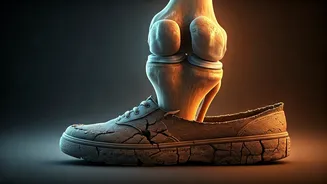
The shoes you choose play a significant role in your knee's well-being. Footwear lacking proper arch support can cause your body weight to be unevenly distributed across your knee joints, concentrating excessive force on specific areas. This imbalance can precipitate issues like persistent discomfort or even the development of osteoarthritis over time. Furthermore, shoes that are rigid or fit poorly can restrict your feet's natural movement patterns, introducing additional strain on your knees. It's also crucial to remember that shoes degrade with use; their cushioning and support diminish, making regular replacement essential to maintain optimal protection and comfort for your knees.
Muscle Weakness and Misalignment
A deficiency in core and leg muscle strength places undue stress on your knees, making even simple movements challenging and potentially painful in the long run. When the muscles surrounding your hips, thighs, and core cannot offer sufficient stabilization, your knees often have to compensate for this lack of support. This compensatory mechanism can lead to knee misalignment and the absorption of excessive load, resulting in discomfort and strain. To mitigate this, incorporating regular strengthening exercises like squats, lunges, and core workouts for about 15-20 minutes a few times weekly can significantly enhance stability and reduce the burden on your knee joints.
Sudden Activity Surges
Abruptly increasing your physical demands can inadvertently lead to knee injuries. This includes suddenly taking up strenuous exercises, embarking on long-distance running without allowing your knees to adapt, or undertaking intense gym sessions after prolonged periods of inactivity. Any activity that subjects the knee to excessive stress without prior preparation can cause harm. The fundamental reason is that your knee joints require time to acclimatize to new levels of physical exertion and novel movement patterns. A gradual progression in activity is paramount to prevent such injuries and allow your body to build resilience.
The Dehydration Factor
While often overlooked, dehydration can have a profoundly negative impact on knee health. Adequate hydration is critical for maintaining proper lubrication of the joint surfaces. When the body is insufficiently hydrated, the natural cushioning between the knee's bones begins to break down, diminishing its shock-absorbing capabilities. Our knees are fundamental to our daily mobility, and these repetitive, insidious habits can contribute to wear and tear over time, even if immediate damage isn't apparent. By proactively addressing these habits and prioritizing self-care, you can significantly safeguard your knee health, alleviate existing pain, and ensure your knees serve you well for years to come.