







Rethinking Education Today
The landscape of education is undergoing a seismic shift as artificial intelligence becomes increasingly pervasive. While academic achievements and qualifications
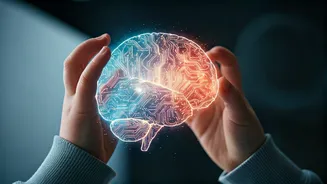
have long been benchmarks of success, experts suggest these alone may not adequately prepare youngsters for the challenges and opportunities of the future. The emphasis is moving towards cultivating unique human capabilities – those that lie beyond the grasp of algorithms and automated systems. This includes developing a strong sense of innovation, the ability to devise novel solutions to complex problems, and a mindset that embraces learning as an ongoing, dynamic process rather than a static accumulation of facts. The goal is to equip children with a resilient skill set that complements, rather than competes with, technological advancements, ensuring they can thrive in an evolving job market.
Embracing Mistakes for Growth
A fundamental reorientation in how we approach learning is essential, particularly in fostering creativity. Neuroscientist Vivienne Ming highlights the need to transition from rote memorization to a hands-on, skill-building approach. Crucially, the fear of failure must be dismantled. Instead, children should be encouraged to view mistakes not as setbacks, but as invaluable stepping stones in their educational journey. Parents can play a vital role in normalizing this perspective by openly discussing personal obstacles and lessons learned from failures within the family. This creates a supportive environment where experimentation is valued and the learning process is seen as iterative, allowing children to develop resilience and a proactive attitude towards challenges.
Nurturing a Curious Mindset
Creating an environment that actively cultivates curiosity is perhaps one of the most impactful ways to foster creativity in children. When young minds are immersed in a rich, stimulating setting, they are presented with diverse ideas and complex issues that naturally prompt critical thinking and independent decision-making. This exposure encourages them to explore different viewpoints, question assumptions, and develop their own informed opinions. The ability to engage with a variety of stimuli and actively seek understanding is crucial for developing adaptability and a proactive approach to learning, ensuring they remain engaged and intellectually agile as they navigate a world of constant change and information.
Asking Better Questions
As the nature of work continues its rapid transformation, instilling adaptability and sharpening critical thinking skills become paramount. Rather than solely prioritizing the acquisition of correct answers, it is far more beneficial to empower children to feel confident in posing insightful questions. This shift in focus encourages a deeper engagement with material and fosters a more nuanced understanding of complex topics. By encouraging them to inquire, probe, and explore the 'why' and 'how' behind concepts, we equip them with the tools to not only comprehend information but also to analyze it critically and apply it innovatively. This inquisitiveness is a cornerstone for lifelong learning and problem-solving.
Beyond the Textbook
As we propel further into an era dominated by technology, our educational methodologies must evolve in tandem. Purely academic knowledge, while foundational, will prove insufficient for children to achieve lasting success. What truly sets an individual apart is their capacity for unconventional thinking, their resilience in navigating unpredictable circumstances, and their adeptness at applying creative solutions when faced with novel challenges. Cultivating an open mind, coupled with an insatiable curiosity to ask questions and examine issues from multiple perspectives, lays an exceptionally strong groundwork for the future. In a world where information is readily accessible, the real challenge lies in developing the critical faculty to comprehend, discern, and synthesize that information effectively.