



The Crucial Missing Link
The Mumbai-Pune Expressway, a critical route for Maharashtra's connectivity, is on the cusp of a major transformation with the near-completion of its 'Missing
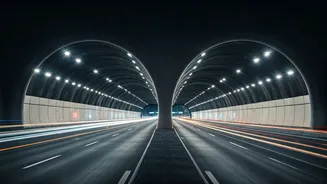
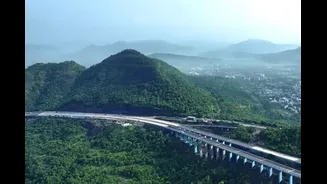
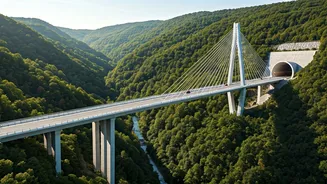
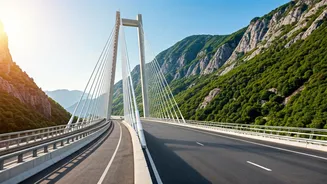
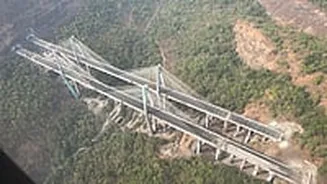
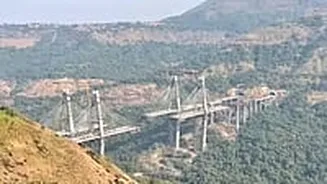
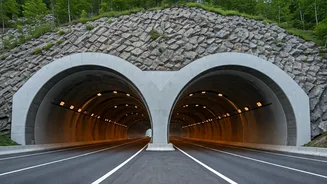
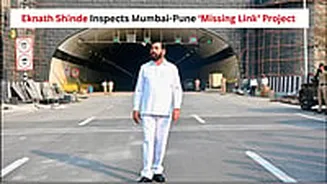
Link.' This 13.3-kilometer segment, a significant upgrade from the existing 19+ kilometers, promises to slash travel time by 20-25 minutes by bypassing the winding and often congested ghat section. The project, divided into two packages by the Maharashtra State Road Development Corporation, includes the construction of eight-lane twin tunnels, totaling 1.75 km and 8.92 km respectively, alongside two eight-lane viaducts spanning 790 meters and 650 meters. This engineering feat is poised to redefine the travel experience between Mumbai and Pune, a journey that has long been essential for commuters and freight alike.
Tunneling Through Innovation
At the heart of the Missing Link's advancement lies India's longest twin-tube road tunnel, a remarkable engineering feat costing Rs 8,000 crore. This tunnel complex is designed for high-speed transit and incorporates cutting-edge safety mechanisms. Features such as advanced fire detection and suppression systems, efficient ventilation, and strategically placed emergency exits are integrated to ensure passenger well-being. Each corridor of the Missing Link is equipped with four lanes, plus an additional shoulder lane, offering more space than the expressway's standard three lanes. Notably, vehicle stoppage is prohibited on this new segment to maintain optimal traffic flow.
Elevated Safety Measures
With the enhanced infrastructure, particularly the new tunnels, the speed limits are under review. Currently, light motor vehicles are permitted up to 100 kmph, and heavy vehicles at 80 kmph. The Maharashtra Highway Police are implementing robust safety measures, including advanced surveillance systems, speed cameras, and a comprehensive emergency response network. Twin control rooms, manned 24/7 by personnel from the Highway Police, MSRDC, and RTO, will monitor live feeds from numerous Pan-Tilt-Zoom CCTV cameras. These control rooms are empowered to immediately dispatch patrolling vehicles, ambulances, fire tenders, and cranes in response to incidents. SOS panic buttons, situated every 250 meters along the Missing Link, offer another layer of immediate assistance, with calls directly routed to the control room for rapid response.
Intelligent Traffic Management
The Missing Link will benefit from an Intelligent Traffic Management System (ITMS) featuring AI-enabled cameras, mirroring the system already operational on the existing expressway. This technology will actively monitor for violations of speed limits and lane discipline, issuing challans to offenders. Dedicated Traffic Aid Posts (TAPs) in Khandala and Borghat, under the Pune and Raigad divisions of the Highway Traffic Police respectively, will oversee specific sections of the new route. Coordination meetings involving MSRDC, Highway Traffic Police, RTO, and local authorities have been instrumental in preparing for the inauguration, ensuring seamless enforcement and emergency response across divisions. Fire tenders, ambulances, and cranes will be permanently stationed at key points to ensure swift reaction to any eventuality.
Phased Access and Speed
The inauguration of the Missing Link on May 1st will usher in a phased approach to its usage. During Phase 1, from May 1st to October 31st, access will be restricted to Light Motor Vehicles, passenger buses, and other passenger vehicles. The speed limit for cars and LMV's will be set at 100 kmph, while passenger vehicles and buses will adhere to an 80 kmph limit. For Phase 2, beginning November 1st, the potential allowance of goods vehicles will be determined following a six-month review. However, vehicles carrying hazardous materials, including inflammable and explosive substances, will be permanently prohibited from using the Missing Link and will continue to utilize the existing expressway. This phased rollout aims to ensure a controlled and safe integration of the new infrastructure.
Navigating Future Challenges
While the Missing Link represents a significant leap forward, potential challenges lie ahead. Experts highlight the critical need for stringent speed enforcement and effective emergency response, especially given the novelty of the infrastructure. Managing public curiosity, which might lead to people slowing down for photos, will require awareness campaigns. The arrival of the monsoon season immediately after inauguration will test the infrastructure's resilience and heighten the risks associated with high-speed travel. The future inclusion of heavy vehicles could reintroduce complexities in road sharing and enforcement, emphasizing the continued importance of the four Es of road safety: Education, Enforcement, Engineering, and Emergency Response.