





A Royal Welcome
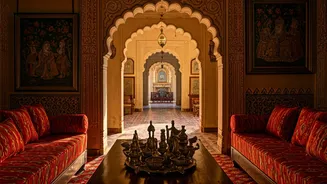
The entrance to Diya Kumari's official residence immediately immerses visitors in the spirit of Rajasthani hospitality, embodying the deeply ingrained
cultural tenet of "atithi devo bhava," where guests are revered as deities. This ethos isn't merely symbolic; it profoundly influences the home's entire aesthetic, from the culinary offerings to the visual narratives presented by artworks adorning the walls. According to psychologist Neha Cadabam, such environments play a crucial role in shaping individual identity and fostering a sense of belonging. When a living space actively showcases cultural heritage through traditional art, architectural nuances, or artisanal crafts, it transcends its utilitarian purpose to become a repository of cherished memories and a solid anchor for personal identity. Being surrounded by elements that resonate with one's history and cultural lineage reinforces a powerful connection to ancestral roots, providing an essential emotional grounding that contributes to psychological stability and a robust sense of self.
Walls of History
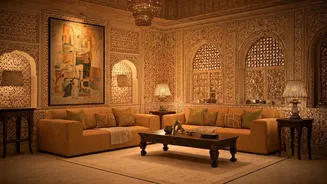
Dominating one of the prominent walls is a striking painting of Amber Fort, a significant landmark for Diya Kumari. This artwork serves as more than mere decoration; it's a tangible link to Rajasthan's glorious past. Kumari explains that Amber was once the capital before Jaipur's establishment, underscoring the fort's historical importance. Her reflection expands to encompass the broader architectural legacy of Rajasthan, with each fort—Kumbhalgarh, Chittorgarh, and Jaisalmer—telling its unique story. She highlights Kumbhalgarh Fort's immense scale, noting its wall is the second-longest globally, surpassed only by the Great Wall of China. This deep connection between landscape and identity is particularly resonant for Kumari, given her extensive experience representing diverse constituencies. As Cadabam elaborates, such cultural touchstones evoke pride by connecting individuals to a narrative larger than their personal accomplishments. These symbols act as potent reminders of ancestry, collective traditions, and shared values, thereby bolstering self-identity and emotional equilibrium, fostering a sense of continuity across generations.
Personal Imprints
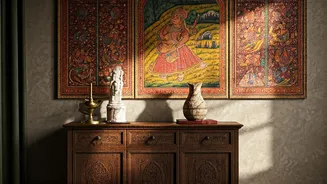
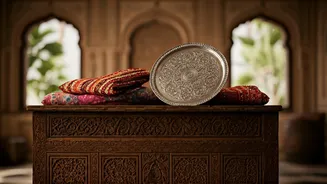
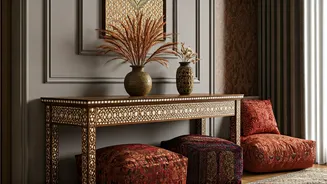
Although designated as an official government property, Diya Kumari has meticulously infused her Jaipur residence with a distinctly personal design sensibility, prioritizing and showcasing local handicrafts. She notes that many of the decorative elements, such as the paintings, were not present originally and were added by her, demonstrating a proactive approach to personalizing the space. A closer inspection reveals an abundance of local artisanal elements: cushions adorned with traditional Sanganeri prints, exquisite displays of blue pottery, and carefully framed miniature paintings, a celebrated art form of Rajasthan. Kumari's deliberate intention was to incorporate indigenous crafts, mentioning Sanganeri textiles and the renowned miniature art. Notably, a captivating blue pottery piece depicts Srinathji, skillfully merging devotional artistry with Jaipur's famed ceramic tradition. This personal curation transforms the official residence into a showcase of Rajasthan's rich artistic heritage, reflecting her deep appreciation for the region's crafts.
Spiritual Resonance Beyond Rajasthan
The artwork adorning Diya Kumari's home extends beyond the regional confines of Rajasthan, embracing a broader spiritual and historical connection. In a dedicated space, a serene painting captures the iconic ghats of Varanasi, a city holding significant historical ties for her family. She elaborates on this connection, citing her lineage's historical links to Varanasi through Raja Man Singh's contributions, including the construction of Man Ghat and support for the Kashi Vishwanath Temple. Kumari finds immense beauty and spiritual solace in this painting, describing it as a focal point for her morning reflection and work. This artwork elevates a particular corner from mere décor to a contemplative sanctuary, offering a moment of peace amidst the demands of public life. This integration of art that evokes personal spiritual connection highlights the home's role as a multifaceted space for both public duty and private rejuvenation.
The Productive Sanctuary
Despite the inherent beauty and cultural richness of her residence, Diya Kumari confesses that her most cherished space is, perhaps surprisingly, her office. She describes it as a place where she finds significant peace and can work without disturbance, appreciating the opportunity for focused interaction. For a public figure navigating the complexities of administrative duties, family life, and political commitments, this room functions as a dual-purpose area—a dedicated workspace and a personal refuge. Psychologist Neha Cadabam explains the psychological importance of such personal spaces, noting that individuals naturally seek a balance between social engagement and solitary moments. Even within expansive homes, dedicated personal corners offer psychological security and a sense of environmental control. These sanctuaries foster concentration and creativity by providing a predictable and calming atmosphere, allowing the brain to associate these environments with tranquility and productivity, ultimately aiding in emotional regulation and mental clarity.
Global Artful Souvenirs
Another light-filled room within the residence showcases a collection of art acquired from various sources, including both domestic Indian travels and international journeys. Kumari actively seeks out local crafts, artisanal creations, and paintings during her visits to new countries and cities. This practice extends beyond the acquisition of personal mementos; it reflects a broader commitment to supporting artisans and promoting their work. By acquiring pieces from these creators, she not only brings unique beauty into her home but also provides vital exposure and reach to artists whose talents deserve wider recognition. This conscious decision transforms her residence into a curated gallery of diverse craft traditions from around the world, weaving a narrative of global appreciation for artisanal excellence into the fabric of her personal space.
Courtyard Charm and Light
The architectural design of the house incorporates an open courtyard, a classic feature of traditional Indian homes, which bathes the surrounding rooms in abundant natural light. Kumari expresses her fondness for this aspect, describing the ambiance as "very nice and light and airy." This feature not only enhances the aesthetic appeal but also evokes the rhythm of older Indian dwellings, where architectural choices were intrinsically linked to climate adaptation and daily living patterns. Psychologically, these sunlit spaces and open areas serve as crucial 'mental reset zones.' According to Cadabam, such areas allow individuals to temporarily disengage from social roles and external expectations, offering essential moments of solitude. These pauses are vital for emotional regulation and maintaining mental clarity, helping to mitigate cognitive overload that can result from constant social interaction or environmental stimulation.
Heirlooms of Legacy
Beyond the decorative arts and interior design, Diya Kumari's personal wardrobe holds profound sentimental value, acting as a repository of inherited history. She reveals that a significant portion of her extensive saree collection comprises pieces passed down from her grandmother and mother, imbued with generations of memories. Additionally, gifts of sarees from friends and acquaintances, coupled with her own personal fondness for collecting them from her travels, further enrich this collection. Each saree, for Kumari, represents more than just an item of clothing; it's a tangible piece of her heritage, a way of carrying a fragment of her past and experiences with her. This practice underscores the idea that heirlooms are not merely objects but vessels that carry emotional significance and perpetuate family legacies through tangible connections.