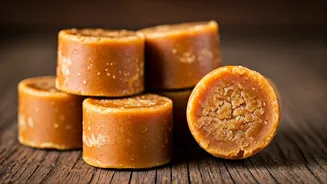

Winter's Jaggery Challenge
Jaggery, a beloved Indian sweetener, often faces a common predicament during winter: it hardens. This change in texture stems from the cold, dry air. As
the temperature drops and humidity decreases, jaggery loses its moisture content, leading to a rock-solid consistency. This makes it challenging to use, whether for grating, melting, or simply enjoying a piece. Understanding why jaggery hardens is the first step toward preventing it. Factors such as improper storage and exposure to air can accelerate this process. Addressing these issues with the right storage methods ensures your jaggery remains soft and ready to enhance your winter recipes.
Humidity: Key to Softness
The secret to keeping jaggery soft lies in maintaining its moisture level. Jaggery absorbs moisture from its surroundings, and it also tends to lose moisture when exposed to dry air. Therefore, proper storage involves providing a humid environment. One effective method is to store jaggery in an airtight container. This prevents moisture loss and safeguards the jaggery from absorbing dryness from the air. You can add a piece of damp cloth inside the container to maintain a higher humidity level. Replace the cloth every few days to prevent mold growth, or you can add a piece of apple or a slice of bread to the container, which also helps to retain moisture. These simple techniques can go a long way in ensuring your jaggery remains soft throughout the winter.
Airtight Storage Solutions
Airtight containers are your best defense against hardened jaggery. Whether it's a plastic container with a tight-fitting lid or a glass jar, the goal is to create a barrier against air and moisture loss. Place the jaggery in the container and seal it properly. Make sure the container is kept away from direct sunlight and heat sources, which can speed up the hardening process. If you have a large block of jaggery, you can consider breaking it into smaller pieces before storing it. This allows you to use the needed amount easily without exposing the entire block to air repeatedly. Remember, the less air exposure, the better the texture of your jaggery will remain.
Natural Moisture Boosters
In addition to airtight containers, natural methods can help retain moisture. Placing a slice of apple or a piece of bread inside the container with the jaggery can work wonders. These items release moisture, which the jaggery absorbs, maintaining its softness. You should keep an eye on the apple or bread, replacing them when they become dry or show signs of mold. Another effective method is to use a slightly damp cloth. Wrap the jaggery in a clean, damp cloth before placing it in the airtight container. This creates a humid environment directly around the jaggery, preserving its texture. Ensure the cloth isn’t overly wet to prevent the growth of mold. This approach requires regular monitoring to keep the cloth at the optimal dampness level.
Avoid Common Mistakes
Several common mistakes can lead to jaggery hardening. Storing jaggery in open containers is a major culprit because it exposes the jaggery to dry air. Another mistake is storing jaggery near heat sources, like ovens or stoves. The heat can cause the moisture to evaporate quickly, making it hard. Overlooking the importance of humidity is another common error. Without appropriate measures to retain moisture, jaggery will inevitably harden. Furthermore, neglecting to check the storage conditions frequently can lead to missed opportunities for adjustments. By avoiding these pitfalls and following the suggested storage methods, you can ensure your jaggery remains soft and delightful throughout the winter months. Regular checks and adjustments are crucial to maintain the ideal storage conditions.