







Pilot Project Overview
The AI precision farming pilot project in Jharkhand marks a significant shift towards technology-driven agriculture. This initiative involves the deployment
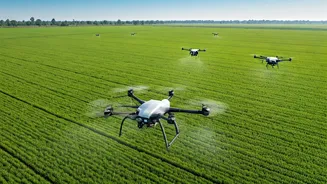
of AI to analyze data related to soil conditions, weather patterns, and crop health, enabling farmers to make informed decisions. The project's primary goals are to improve crop yields and decrease the use of resources such as water and fertilizers. The pilot program focuses on employing machine learning algorithms to predict and manage pest outbreaks, which helps in preventing crop damage. Data collection is crucial, with sensors and drones gathering real-time information. This allows for prompt interventions and customized farming practices. Ultimately, the project strives to improve the economic viability of farming by cutting down costs, enhancing output, and promoting eco-friendly methods. This represents a substantial shift in farming approaches in Jharkhand, paving the path for a smarter, more sustainable agricultural future.
Benefits of AI
The implementation of AI in Jharkhand's agricultural sector offers numerous advantages. Precision farming, powered by AI, allows for detailed analysis of soil, water, and climate data, leading to optimized resource usage. For instance, the system can determine the exact amount of water and fertilizer required for specific plants, preventing over-application and conserving valuable resources. AI also provides early warnings of potential crop diseases and pest infestations. Timely warnings enable farmers to take preventative measures before significant damage occurs, thereby increasing yields and reducing financial losses. Furthermore, the use of AI improves the sustainability of farming by decreasing the use of chemicals and promoting more environmentally friendly practices. By providing real-time data and actionable insights, AI empowers farmers to make data-driven decisions. This results in greater efficiency and profitability. Moreover, the adoption of AI can reduce operational costs, making it easier for farmers to increase their profits, enhance their economic standing, and promote a more sustainable future.
Data Collection Methods
Effective data gathering is essential to the success of AI in precision farming in Jharkhand. A variety of technologies are used to collect detailed information about agricultural conditions. Sensor networks are deployed to track soil moisture levels, temperature, and nutrient content, providing continuous and real-time data. Drones are used for aerial surveillance, capturing high-resolution images of fields to assess crop health. These drones can detect early signs of diseases or stress. Satellites contribute additional data by providing large-scale environmental information, including weather patterns and rainfall data. Furthermore, machine learning algorithms are utilized to process and analyze the vast amounts of data collected from these sources. This integrated approach allows farmers to gain a comprehensive understanding of their crops and the environmental conditions that influence their growth. The analysis identifies challenges, predicts problems, and allows for proactive interventions. Efficient data collection methods form the foundation for AI-driven insights that promote optimal yields and efficient resource management.
Future Prospects
The future of AI precision farming in Jharkhand looks promising, with substantial potential for growth and advancement. As the pilot project progresses, the technology is expected to be expanded to more farms throughout the state, benefiting a wider range of farmers. Advancements in AI and related technologies will improve the accuracy and efficiency of farming practices. Further research and development will focus on the development of more customized solutions for diverse crops and farming conditions. The integration of AI with other technologies, such as blockchain, could enhance supply chain transparency and traceability, increasing farmer profits. Collaboration between government agencies, agricultural research institutions, and private sector companies will be essential to ensure widespread adoption and effective implementation. These cooperative efforts will promote knowledge-sharing, skill-building, and the creation of favorable policy frameworks that sustain long-term growth. The ongoing adoption of AI is set to transform Jharkhand's agricultural landscape, fostering increased productivity, improved sustainability, and economic growth.