





Record-Shattering Race
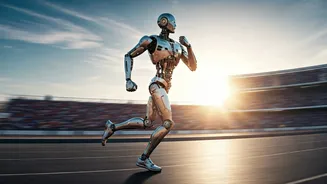
The recent humanoid robot half marathon in Beijing marked a seismic shift in robotic capabilities. While last year's winning robot trailed significantly
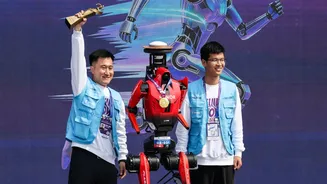
behind human runners, this year saw a remarkable turnaround. A humanoid robot, developed by a Chinese smartphone manufacturer, not only completed the entire 21-kilometer (13-mile) course but did so in an astonishing 50 minutes and 26 seconds. This performance soundly beat the existing human world record of 57 minutes and 20 seconds, signaling a pivotal moment for the field of robotics. This rapid improvement is a clear indication that humanoid robots are not only here but are rapidly approaching a level of performance that demands serious attention from industries, governments, and anyone concerned with the future of employment.
The progression observed in just one year is astounding. Last year, the focus was on robots completing the race, albeit slowly and with remote human control. This year, a significant portion of the robots competed autonomously, demonstrating enhanced self-guidance and operational independence. The increase in participating teams and robots from 20 to 100 teams fielding 300 robots between 2025 and 2026 further underscores the burgeoning interest and investment in this technology. This event served as more than just a competition; it was a powerful demonstration of the accelerating development curve in humanoid robotics, moving them from novelty to potential utility.
Technological Leaps Forward
The remarkable performance of humanoid robots in the half marathon is a direct result of significant advancements in several key technological areas. Firstly, the strength and efficiency of robot joints and motors have dramatically improved. Running for extended periods generates considerable heat, which can degrade robotic components. The winning robot's use of liquid cooling addresses this issue, a common focus for manufacturers aiming to enhance durability. Beyond raw power, component endurance has seen substantial gains. Running subjects robotic limbs and actuators to thousands of repetitive, high-impact stresses, essentially serving as an extreme durability test. Overcoming these stresses indicates improved resilience in crucial moving parts. Furthermore, autonomous navigation capabilities have progressed considerably. Last year, all robots were remotely operated; this year, many navigated complex courses independently, featuring sharp turns, inclines, and crowded environments. This leap in self-guidance signifies advancements in Simultaneous Localization and Mapping (SLAM) and real-time obstacle avoidance, crucial for operating in dynamic and unpredictable settings. These combined improvements are bringing humanoid robots closer to practical utility across various demanding applications.
Future Work and Societal Impact
The implications of these rapidly advancing humanoid robots extend far beyond athletic competitions; they signal a profound shift in the future of work and society. As robots become more capable in terms of speed, endurance, and navigation, their potential deployment in industrial settings increases exponentially. We are already seeing world-first demonstrations of humanoids on industrial-scale electronics production lines, a trend likely to accelerate. However, significant challenges remain before widespread adoption. Dexterous manipulation tasks, such as handling delicate objects or using tools designed for human hands, are still areas where robots largely lag. The problem of fine motor control at a commercial scale is yet to be fully solved. Moreover, while navigation has improved, robots require enhanced physical AI and a deeper semantic understanding of their environments. They need to move beyond programmed routes and develop the ability to reason and adapt to novel situations, a concept known as generalization. The current inability of humanoids to complete a high percentage of tasks in home settings highlights the ongoing research needed in sim-to-real transfer and robust AI. Finally, cost remains a critical barrier. While some affordable models are emerging, they are not yet suitable for factory floors. Until the price point of humanoids approaches that of industrial collaborative robots, justifying the return on investment will be difficult, potentially delaying broad integration into the physical labor workforce by an estimated three to five years. This impending disruption necessitates proactive societal planning regarding regulation, taxation, and workforce retraining.