





A Timeless Silhouette
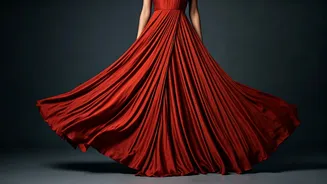
The anarkali, originally rooted in Indian culture, is much more than just a garment; it is a cultural icon that resonates with timelessness. This silhouette
has captured the essence of romance, rebellion, and royalty in various films, from 'Mughal-e-Azam' to period-inspired films of the 2000s, where it often stole the spotlight in grand song sequences. The anarkali's flowing flares served as significant elements of storytelling, alongside the script. Its design, characterized by a structured bodice flowing into a flared skirt, has undergone subtle changes over time. It represents a transition from cinematic fantasies to real-life wardrobes, seamlessly integrating into weddings, festivals, and family celebrations, rather than merely being a passing trend. This shift highlights how it has evolved to suit various occasions.
Craftsmanship and Detail
The construction of the anarkali emphasizes thoughtful details and sophisticated execution. The use of fine resham threads in the embroidery, and the incorporation of floral and foliage motifs in muted colors like amber, soft olive, and brushed gold, shows a focus on understated elegance. This approach contrasts with the trend for excessive ornamentation, which means that the beauty of the design reveals itself slowly, rewarding the viewer's attention. The incorporation of Chanderi silk enhances the appeal of the anarkali. Its lightweight, breathable, and slightly lustrous qualities make it suitable for Indian climates and celebrations, prioritizing comfort as a form of luxury. The overall design prioritizes balance, emphasizing structure and softness, which ultimately provides the ensemble with a sense of quiet sophistication.
Modern Adaptations
The anarkali has evolved from its traditional form to adapt to the present while still keeping its classic roots. A modern approach can be seen in the jacket-style upper construction, which provides a defined, contemporary silhouette. This blending of classic design and modern elements results in ceremonial elegance without an excessive emphasis on costume-like aesthetics. The look presented by Karisma Kapoor, in a soft beige anarkali, showcases a Mughal Begum-inspired aesthetic. This particular adaptation underscores the evolution of the anarkali and its continued relevance in contemporary fashion, proving that it adapts to current trends while still keeping its timeless appeal.
The Fabric's Role
The selection of fabric plays a pivotal role in highlighting the anarkali's appeal. Chanderi silk is a prime choice, noted for its lightweight, breathable qualities, and delicate sheen, which allows it to flow beautifully with the body and climate. This makes it an ideal textile for Indian celebrations. The fabric's practicality and adaptability enhance its poetic quality. This choice of fabric complements the silhouette's graceful movement, and highlights its suitability for enduring wear. The fabric and silhouette combined symbolize a lifestyle that values comfort and adaptability without sacrificing beauty. This signifies a design that respects tradition, while embracing modern-day needs and preferences.
Beyond the Screen
Although the anarkali has stepped back from center-stage cinema, its importance in our lives hasn't decreased. It has found a place in moments of significance, rather than just trends. The anarkali can be found in a variety of settings, ranging from weddings and festivals to other family events. Karisma Kapoor's look reminds us that certain silhouettes transcend transient trends and continue to evolve. The adaptability of the anarkali demonstrates its ability to move from cinematic brilliance to regular life. This proves that anarkali didn't disappear but has reinvented itself for different uses. This evolution solidifies its position as a classic and versatile garment in modern Indian wardrobes, proving that it has a long-lasting impression on fashion.