






Collision Course Neutralized
In a significant stride towards a safer space environment, a collaborative effort is underway to establish a robust commercial service dedicated to the
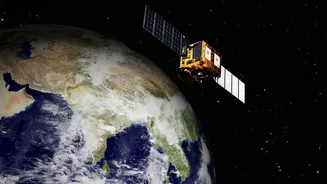
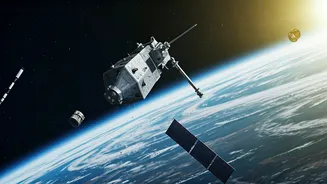
removal of orbital debris. This initiative sees a company focused on agile spacecraft technology joining forces with an Australian startup to bring a practical solution to the growing problem of space junk. The core of this service lies in the integration of a maneuverable spacecraft, designed for intricate orbital operations, with a novel payload engineered to identify and secure small fragments of defunct satellites and rocket stages. This partnership aims to transform debris removal from an experimental concept into a repeatable, operational service, addressing a critical need for maintaining the integrity and safety of Earth's orbital pathways. The objective is to actively clear out hazardous materials that pose a significant risk to active satellites and future space missions.
Capture Technology Deployed
At the heart of this ambitious project is a specialized payload, a technological innovation designed to pinpoint and grapple orbital debris. This system is engineered to tackle objects up to one meter in size, securely capturing them for subsequent disposal. While the technology is still awaiting its in-space debut, its potential is considerable. This capture mechanism will be integrated onto a highly agile spacecraft, boasting substantial velocity change capabilities, enabling it to navigate complex orbital environments with precision. The spacecraft is slated for its inaugural mission in late 2026, hitching a ride on a commercial launch service. A subsequent mission in 2027 will deploy the capture payload onto a spacecraft destined for a densely populated low Earth orbit, a region characterized by a high concentration of active satellites and a greater risk of collisions.
Operationalizing Debris Removal
The vision behind this venture is to move beyond theoretical approaches and establish a tangible, operational service for orbital debris removal. The developers emphasize that this is not about experimentation, but about creating a consistent and reliable method for cleaning up space. The goal is to make debris removal a routine part of space operations. A key indicator of the service's potential impact comes from a commercial space station developer, which has already expressed interest by signing a letter of intent. This future customer views the service as a crucial element in enhancing the safety and operational efficiency of its planned space station. By actively reducing the risk of collisions and minimizing the need for frequent evasive maneuvers, the service directly contributes to crew safety, simplifies mission management, conserves valuable propellant, and supports longer operational lifetimes for spacecraft, all vital aspects for the success of space endeavors.
Economic Imperative Clear
The economic justification for tackling space debris is becoming increasingly evident. Recent studies highlight the substantial financial burden incurred by satellite operators due to potential collisions. For instance, a 2023 analysis estimated that U.S. satellite operators were spending millions annually on maneuvers designed solely to avoid impacts with orbital debris. While this figure primarily covered operational satellites, including critical scientific and weather monitoring assets, it underscores the financial strain. Furthermore, a follow-up report in 2024 explored the cost-effectiveness of various debris remediation and mitigation strategies. Although not specifically evaluating the proposed service, it indicated that in certain scenarios, actively removing existing debris can be just as economically viable as implementing measures to prevent the generation of new debris, further solidifying the business case for such cleanup initiatives.