





Mountain Ghosts Unveiled
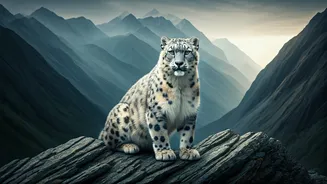
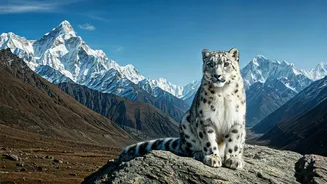
High in the majestic mountain ranges of Central and South Asia, including the formidable Himalayas, resides the snow leopard, often revered as the 'ghost
of the mountains.' Its survival hinges on an extraordinary camouflage; its smoky-grey coat, adorned with dark rosettes, allows it to blend seamlessly with the rugged, rocky terrain, rendering it virtually invisible to both prey and potential threats. These felines are solitary hunters, preferring the solitude of steep, remote landscapes far removed from human habitation. Their stealthy nature means even seasoned researchers can embark on lengthy expeditions, employing sophisticated camera traps, without ever directly observing one. Each captured image of this elusive cat is thus a significant victory for conservation efforts, underscoring its incredible rarity and the challenges in studying it.
The Asian Unicorn's Secret
Tucked away within the dense forests of Laos and Vietnam, the saola, aptly nicknamed the 'Asian unicorn,' stands as one of the world's most infrequently encountered large mammals. Its scientific discovery in 1992 was a monumental event, revealing a creature with an almost mythical appearance, characterized by its long, straight horns and distinctive white facial markings. The limited number of live sightings in the wild is staggering, and no individuals are known to be held in captivity. This profound rarity is largely attributed to the ongoing threats of habitat destruction and hunting, which have only amplified its enigmatic status and made any encounter an exceptionally special occasion.
Rainforest's Striped Secret
The dense rainforests of the Democratic Republic of Congo are the sole domain of the okapi, a creature that at first glance might be mistaken for a curious blend of zebra and giraffe. In reality, it is the giraffe's closest living relative, possessing a naturally shy and secretive disposition. Its dark, velvety body serves as a remarkable natural camouflage, allowing it to disappear effortlessly into the deep forest shadows. Complementing this, its strikingly striped legs create a visual confusion that aids in evading predators. Due to its preference for remote woodland environments and its innate avoidance of human contact, the okapi remained unknown to Western science until the early 20th century, adding to its mystique.
Scaly Mammal's Hidden Life
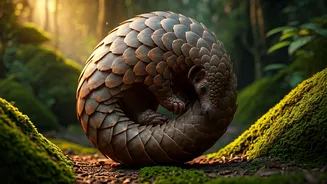
Adorned with a unique coat of protective keratin scales, the pangolin presents a truly peculiar figure among mammals and is exceptionally challenging to locate. Predominantly nocturnal and exceedingly secretive, this creature possesses an instinctive defense mechanism: when faced with danger, it curls into a tight, impenetrable ball. Pangolins are distributed across various regions of both Asia and Africa, where they typically spend their days concealed within burrows or hidden beneath dense forest foliage. Unfortunately, their distinctive scales make them a prime target in the illegal wildlife trade, leading to their status as one of the most trafficked mammals globally and further diminishing the chances of spotting them in their natural habitats.
Cold Climate Cat's Rarity
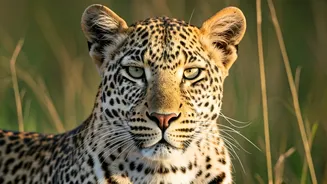
Dwelling in the frigid forests of the Russian Far East and northeastern China, the Amur leopard stands as one of Earth's most endangered big cats, showcasing a remarkable adaptation to cold, snowy environments that distinguishes it from other leopard species. This magnificent predator is primarily active under the cover of night, roaming vast territories that contribute to the extreme rarity of any encounters. With an estimated population numbering fewer than a few hundred individuals remaining in the wild, the opportunity to witness an Amur leopard is considered a truly once-in-a-lifetime event, even for dedicated wildlife researchers who extensively track its movements.
Madagascar's Nocturnal Primate
Hailing from the island of Madagascar, the aye-aye is a peculiar nocturnal primate distinguished by its striking appearance, which includes large, prominent eyes, bat-like ears, and a remarkably elongated middle finger. This specialized finger is crucial for its foraging strategy, used to tap on trees and detect insect larvae hidden within. The aye-aye's secretive lifestyle, characterized by its activity only during the night and its preference for deep forest environments, makes it a seldom-seen creature. Compounding this rarity are local superstitions and myths that have historically fostered fear of the aye-aye, unfortunately leading to persecution and further contributing to the scarcity of sightings.
Flightless Parrot's Camouflage
Native to New Zealand, the kakapo is a sizable, flightless parrot that ranks among the world's most endangered avian species. This unique bird is primarily active at night and lives a ground-dwelling existence, displaying an extremely shy temperament. Unlike its more flamboyant and brightly colored relatives, the kakapo boasts moss-green plumage that provides exceptional camouflage amidst the forest undergrowth. Conservation efforts focus intensely on monitoring each surviving kakapo, and direct sightings are typically limited to the dedicated scientists and teams actively involved in crucial recovery programs aimed at preserving this rare species.
Ocean's Deepest Mystery
Few beings in the natural world evoke as much mystery and intrigue as the giant squid. Inhabiting the ocean's depths, often thousands of feet below the surface, this colossal cephalopod remained largely a creature of legend for centuries. Most of the knowledge about these enigmatic animals historically came from deceased specimens that washed ashore or were discovered within the stomachs of other marine predators. It was only in relatively recent times that scientists managed to capture the first visual evidence of giant squids alive and thriving in their natural, abyssal habitat, underscoring their status as one of the planet's least observed and most enigmatic inhabitants.