







The Orbital Computing Frontier
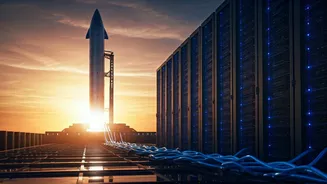
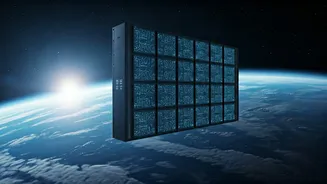
SpaceX is embarking on an ambitious project to establish a vast network of data centers in outer space, envisioning a constellation of one million satellites.
This bold move stems from Elon Musk's conviction that space will soon become the most economically advantageous location for artificial intelligence operations. He projects that within a 30 to 36-month timeframe, orbital data centers will offer unparalleled benefits for AI scaling. This initiative aims to generate approximately 100 kilowatts of computing power per ton for each satellite, collectively adding 100 gigawatts of AI compute capacity annually. While the concept is audacious and has faced scrutiny, Musk remains resolute, asserting that space presents a uniquely compelling solution for the future of AI, addressing critical resource limitations faced by terrestrial data centers. The company is actively recruiting for numerous specialized engineering roles to bring this vision to fruition.
Data Center Boom's Strain
The relentless growth of artificial intelligence has spurred an unprecedented boom in data center construction. These facilities are remarkably resource-intensive, with the largest consuming power equivalent to an entire city and millions of gallons of water daily. An investigation revealed that U.S. data centers could soon demand more electricity than Poland. The number of permitted data center constructions in the U.S. has surged dramatically, from 311 in 2010 to an estimated 1,240 by the end of 2024. Currently, data centers account for about 4.4% of total U.S. electricity consumption, and globally, they represent around 1.5% of global electricity usage. Projections indicate that by 2030, the world will need a staggering $6.7 trillion investment in data centers to meet the escalating demand for computing power. Major technology corporations are responding with substantial capital expenditures, with expectations reaching approximately $600 billion by 2026, including a $200 billion investment planned by one company alone.
Space: The Energy Solution
Elon Musk posits that the burgeoning need for AI processing power necessitates a shift beyond Earth's limitations. He argues that terrestrial power grids are reaching their capacity, with electricity output outside of China largely stagnant. This presents a significant bottleneck for establishing new data centers in many regions. Musk emphasizes that his space-based data center plan is not primarily about reducing energy costs, but rather about ensuring access to sufficient energy. He suggests that launching data centers into orbit bypasses the constraints of limited terrestrial power availability and the competition for land and resources, especially in areas like Northern Virginia where housing developments and data centers are vying for the same limited space and escalating electricity prices. The very name 'space' implies the abundant room available beyond our planet.