






A New Lunar Relay
The successful completion of the Artemis 2 mission, which saw astronauts journey around the moon for the first time in over fifty years, is being hailed
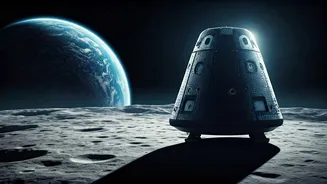
by NASA's chief as merely the prelude to a grander lunar endeavor. This mission is envisioned not as an endpoint, but as the initial stride in a continuous 'relay race' towards establishing a sustained human presence on the Moon. NASA aims to leverage the momentum and public belief generated by Artemis 2 to achieve what has previously seemed almost impossible. The agency's leadership has articulated a strategic shift, moving away from trying to satisfy diverse, often conflicting, external demands to focusing intently on its core mission. This renewed focus is crucial for fulfilling its mandate to the American taxpayers and the global community of space enthusiasts. The overarching goal is to create a long-term foothold on the lunar surface, with an understanding that the initial stages will resemble a construction zone, a necessary phase for building future capabilities.
Building a Lunar Outpost
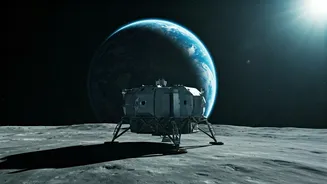
The strategy for building a moon base is a step-by-step process designed to ensure a lasting human presence. This phased approach includes extensive robotic precursor missions, with landings planned as frequently as monthly in the lunar south pole region, starting in 2027. These robotic efforts will lay the groundwork for future human expeditions. Furthermore, the development of advanced technologies, such as nuclear power and propulsion systems, is deemed essential for enabling long-duration missions and facilitating the eventual journey to Mars. The agency acknowledges that not every robotic mission will be a complete success; the emphasis is on learning from failures and adapting quickly to accelerate progress. This agile methodology is particularly important given the competitive landscape, where success is measured in months rather than years.
Reimagining Space Stations
In parallel with lunar ambitions, NASA is also undertaking a significant reevaluation of its commercial space station program, intended to succeed the International Space Station (ISS) post-2030. The revised proposal centers on a core module accompanied by commercial add-ons, with the belief that the private sector is best positioned to develop these components. This strategy aims to maintain a continuous human presence in low Earth orbit, fostering research, manufacturing, and operations. The ultimate objective is to cultivate a robust space economy, driving innovation and securing America's leadership in this critical domain. By supporting more private astronaut missions and commercial research opportunities, NASA seeks to catalyze the growth of an orbital economy, even if it cannot directly force its existence. This approach also involves initiatives to strengthen the NASA workforce, such as bringing in expertise from industry through temporary appointments to enhance training and knowledge sharing.
Global Collaboration and Competition
NASA's expanded lunar objectives and low Earth orbit strategies are intended to be executed collaboratively with international partners, including the more than 60 signatories of the Artemis Accords. This global cooperation is vital for achieving shared objectives with urgency. While emphasizing collaboration, the agency is also acutely aware of the competitive pressures, particularly from China, which aims to land astronauts on the Moon by 2030. NASA's leadership stresses that success in these endeavors requires rapid execution, with interim milestones for the Artemis missions being critical. The agency is determined to maintain its pioneering role in space exploration, drawing inspiration from its history of tackling monumental challenges to ignite the passion of the next generation of explorers. This drive to achieve the extraordinary is seen as key to inspiring future generations to contribute to humanity's grand adventure in space.