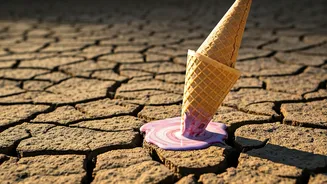

The Cooling Delight
Ice cream, a beloved dessert across India and the globe, provides a quick and satisfying cool-down, especially during hot weather. It's available in diverse
flavors, from classic vanilla and chocolate to exotic mango and pistachio, catering to varied tastes. The appeal of ice cream lies not only in its taste but also in its texture, which delivers a soothing sensation. However, this pleasurable experience often leaves us seeking hydration. The very characteristics that make ice cream enjoyable – its composition and the body's reaction to it – can inadvertently cause thirst. Understanding this paradox involves exploring the roles of sugar, salts, and the body's natural cooling mechanisms.
Sugar's Deceptive Role
A significant factor contributing to ice cream-induced thirst is its high sugar content. Sugar, particularly simple sugars like glucose and fructose, pulls water from the cells. When we consume ice cream, the sugar concentration in the bloodstream increases. To balance this, the body draws water from cells to dilute the sugar, leading to cellular dehydration. This triggers the thirst response, signaling the need to replenish lost fluids. The type and amount of sugar in the ice cream affect this process. The more sugar, the greater the potential for dehydration and the stronger the resulting thirst. This effect is noticeable even after consuming small servings.
Salt's Hydrating Impact
Ice cream contains salts, either as natural components of ingredients or as additives used to enhance flavor and texture. Salts, like sugar, can influence the body's hydration levels. Salt has an affinity for water; it attracts and retains it. This interaction can shift water balance within the body. When sodium levels rise in the bloodstream due to ice cream consumption, the body attempts to maintain equilibrium by drawing water into the bloodstream. This can reduce the water available in cells, which stimulates thirst. The sodium content in ice cream, though often subtle, contributes to this effect. The concentration of salt, combined with the sugar content, intensifies the thirst response, especially after larger servings.
Fats and Water Balance
Fat, another key ingredient in ice cream, also plays a role in the hydration equation. Fats can slow down digestion, affecting the rate at which other ingredients, including sugars and salts, are absorbed into the bloodstream. This delayed absorption can lead to a more gradual rise in blood sugar, potentially lessening the immediate thirst effect associated with rapid sugar intake. While fats themselves don't directly cause dehydration like sugar and salt, they can indirectly influence hydration by modulating how quickly other thirst-inducing components are processed. The higher the fat content, the more it may mitigate the intense thirst response.
The Cooling Process
The body’s natural cooling mechanisms can also affect thirst when consuming ice cream. The act of eating a cold treat lowers the internal body temperature, a change the body works to counteract. To restore the normal internal temperature, the body increases its metabolic rate, requiring energy. This process may lead to a subtle increase in internal heat, potentially triggering thirst. Furthermore, the body might start the sweating process, which results in fluid loss and thus the need to rehydrate. The cooling effect of the ice cream itself may initially suppress thirst, but as the body begins to regulate its temperature, the thirst sensation can be activated, creating the need for a water intake.
Beyond The Scoop
Beyond the immediate effects of sugar, salt, and fat, other components in ice cream, as well as individual variations, influence the level of thirst. Certain artificial flavors or additives can also play a role, influencing the body's reactions. The amount of water present in the ice cream, which varies based on the recipe and manufacturing methods, plays a role. People's personal physiology affects the degree to which they experience the thirst after ice cream. Hydration status, metabolic rate, and overall health conditions play significant roles. For example, individuals with diabetes may experience thirst more intensely due to elevated blood sugar levels. Understanding these factors provides a more complete view of why a delightful scoop often ends with a need for a glass of water.