



Outdated Vanity Lighting
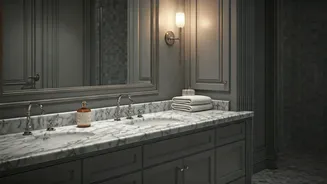
Lighting above the vanity is frequently overlooked, accumulating dust and paint splatters over time, diminishing its effectiveness. An old fixture often
casts unflattering light, making it difficult for tasks like applying makeup. Upgrading to a modern fixture with a cooler light temperature, around 5000K, is recommended to provide better illumination for grooming activities, instantly enhancing the vanity area and its overall appeal.
Mold-Prone Carpeting
Carpeting in bathrooms is a significant design misstep and a potential health concern due to the high humidity. Moisture absorbed by carpet fibers can lead to mold and mildew growth, creating an unsanitary environment. Designers strongly advise against it, suggesting large, washable bath mats as a plush alternative that can be easily cleaned, thereby avoiding the issues associated with permanent carpeting in such a damp area.
Vessel Sinks
Vessel sinks, which sit atop the counter, tend to collect grime, water spots, and soap scum around their base, creating cleaning challenges for designers. Their elevated design can also cause more splashing, leading to potential water damage on the surrounding countertop. Many designers prefer under-mount or drop-in sink styles, which offer a sleeker look, easier maintenance, and a more seamless integration with the countertop.
Privacy-Lacking Barn Doors
Barn doors are generally unsuitable for bathrooms due to significant concerns regarding privacy, sound insulation, and humidity control. While they might save space, their gaps prevent a proper seal, compromising the bathroom's enclosed environment. For space-constrained bathrooms, pocket doors are a more practical alternative, offering better sealing capabilities and a more refined aesthetic compared to the drawbacks of barn doors.
Rusted Shower Caddies
While functional, shower caddies often fall short in aesthetic appeal and are prone to rusting, detracting from the bathroom's overall look. Designers recommend built-in shower niches for integrated storage during renovations. If demolition isn't an option, opt for non-rusting, sleeker caddy designs or consider decanting toiletries into uniform glass bottles to reduce clutter and improve the visual harmony within the shower space.
Chaotic Toiletries
Cluttered countertops filled with disorganized toiletries, makeup, and medicine cabinet items create visual noise and detract from a serene bathroom atmosphere. Original packaging for items like cotton balls and Q-tips takes up unnecessary space. Designers suggest using elegant glass containers to store these essentials, which not only streamlines the look but also minimizes countertop clutter for a more organized and visually pleasing vanity area.
Center-Stage Toilet
The visible toilet from an open bathroom doorway is a significant turnoff for many interior designers, as it can make the space feel less inviting. To mitigate this, designers suggest strategically placing the vanity to act as a visual buffer. This arrangement shifts focus away from the commode towards a more aesthetically pleasing vanity area, enhancing the overall elegance and welcoming feel of the bathroom.
Towel Free-for-All
While creative mixing of colors and textures can work elsewhere, bath towels should be a coordinated element in the bathroom. Mismatched towels, regardless of their origin, create a disorganized and less sophisticated appearance. Designers emphasize the importance of using towels that are uniform in color and design to achieve a cohesive, polished, and visually appealing look that elevates the bathroom's overall style.