





The Astonishing Olm
Deep within European subterranean rivers lives the Olm, a blind cave salamander with an extraordinary ability to survive for over a decade without consuming
any food. Through extensive laboratory research, it has been observed that this remarkable amphibian can drastically reduce its metabolic rate to near-zero levels when deprived of sustenance. This energy conservation is a crucial adaptation, allowing it to thrive in environments where food is exceptionally scarce. Its physiology is a testament to nature's ingenuity in overcoming extreme resource limitations, making it a true champion of biological endurance and a fascinating subject for scientific study into long-term survival mechanisms under duress.
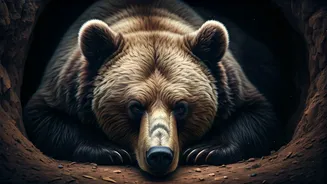
Hibernating Bears
Brown bears demonstrate an impressive capacity for prolonged fasting, typically enduring a hibernation period of around seven months each year without any food intake. During this extended state of inactivity, their bodies exhibit remarkable efficiency by recycling metabolic waste products, thereby preventing significant muscle degradation. Their survival hinges almost entirely on the substantial fat reserves they diligently build up in the months leading up to winter. This strategic energy storage and physiological conservation allows them to remain dormant and survive the lean winter months, a powerful example of animal preparation and resilience against seasonal environmental challenges and food scarcity.
Okinawa Habu's Record
Hailing from Japan, the venomous Okinawa Habu snake holds an impressive Guinness World Record for its extraordinary fasting capabilities, having been documented to survive for an astonishing period exceeding three years without any sustenance. Following a substantial meal, this serpent masterfully stores excess fat and dramatically decelerates its heart rate. This physiological response is a finely tuned mechanism for energy conservation, enabling it to extend the duration between meals significantly. Its ability to go without food for such an extended time highlights a highly efficient metabolic system designed for survival in unpredictable feeding conditions.
Penguin's Endurance
Male Emperor Penguins undertake a remarkable feat of endurance, regularly undergoing fasting periods of more than four months while they attend to their breeding duties. The longest recorded fast for these Antarctic birds has reached an impressive 134 days. Their survival during these challenging times is made possible by substantial reserves of body fat accumulated beforehand. Furthermore, they employ a communal strategy of huddling together on the frigid Antarctic ice, which helps them conserve precious body heat and further minimize energy expenditure. This combination of physiological preparedness and cooperative behavior is key to their survival in one of Earth's harshest environments.
Crocodilian Survival
Crocodiles possess an astounding capacity to survive for extended durations, often ranging from two to three years, without the necessity of eating. This remarkable resilience is observed both in their natural habitats and in captive environments. Following a meal, they engage in a physiological slowdown, significantly reducing their heart rate and digestive processes. This metabolic deceleration, coupled with the utilization of stored body fat, enables them to sustain themselves until more prey becomes available in their environment. This extended fasting capability is a crucial adaptation for these apex predators, allowing them to endure periods of scarcity.
Burrowing Frogs' Cocoon
Certain species of Australian frogs, belonging to the Cyclorana genus, exhibit a unique survival strategy by burying themselves within protective mud cocoons. These amphibians can remain in this dormant state for periods of two to five years, particularly during prolonged drought conditions. In this suspended animation, their metabolic activity plummets drastically, conserving vital energy. This state of dormancy persists until the return of rain, which then triggers their re-emergence, renewed activity, and the commencement of their breeding cycles. This adaptation is crucial for surviving arid conditions and ensuring the continuation of their species.
Tardigrade Resilience
The microscopic Tardigrade, often known as the 'water bear', possesses an almost supernatural ability to survive extreme conditions, including decades without food or water, by entering a state of suspended animation called cryptobiosis. During this profound dormancy, their biological processes virtually cease, allowing them to withstand environmental extremes that would be fatal to most life forms. Upon rehydration, these resilient creatures can revive and resume their normal metabolic functions, appearing as though time had simply stood still for them. This unparalleled ability makes them one of the most durable organisms known to science, offering insights into the fundamental limits of life.
Desert Snail's Seal
Desert snails have developed a highly effective method for enduring arid environments and prolonged food scarcity by sealing themselves within their protective shells. This natural mechanism allows them to survive for several years without any intake of food or water. Research conducted in arid regions, such as the Negev Desert, has demonstrated their extraordinary ability to revive and resume normal activity even after an astonishing four years of extreme dryness. This adaptation showcases a remarkable level of resilience and a sophisticated biological strategy for overcoming the challenges of desert survival, enabling them to persist through severe environmental hardships.