






Gond Preparation
Begin your culinary journey by meticulously preparing the star ingredient: edible acacia gum, or gond. This vital step involves thoroughly drying the gond until
it's perfectly brittle. Once dried, gently crush or lightly powder it to achieve a consistency that integrates seamlessly into the laddu mixture. Proper preparation ensures the gond will puff up correctly when fried, contributing to the characteristic texture of the finished sweet. This initial stage sets the foundation for the overall quality and mouthfeel of your homemade gond laddus, making it a crucial preliminary action for any aspiring home cook aiming for authentic results.
Roasting Flour & Ghee
Next, focus on the rich base of your laddus by carefully roasting wheat flour in pure ghee. Heat the ghee in a pan over a gentle flame and then introduce the wheat flour. Continuous stirring on low heat is paramount here. You're aiming for the flour to transform into a light brown hue and release a delightful, nutty aroma. This process is fundamental; it not only cooks the raw flour but also develops a complex flavor profile that will define your gond laddus. Achieving this toasted depth without burning the flour is key to the sweet's overall deliciousness and ensures a superior taste experience.
Adding Khoya
To elevate the richness and impart a luxurious texture to your gond laddus, incorporate khoya, also known as mawa, into the roasted flour mixture. Gently cook the khoya with the flour and ghee over low heat, ensuring it combines thoroughly. This addition significantly enhances the overall mouthfeel and flavor intensity of the laddus, lending them a delightful creaminess that complements the nutty notes from the roasted flour. Patience during this stage is rewarded with a more decadent and satisfying sweet treat, making it an indispensable part of the traditional recipe.
Sweetening the Base
For the essential sweetness, you have a choice between natural jaggery or rich brown sugar. Introduce your chosen sweetener into the warm, roasted flour and khoya mixture. Stir diligently until the sweetener is completely dissolved and evenly distributed throughout the blend. This step ensures that each bite of your gond laddu will be perfectly balanced in terms of sweetness, harmonizing with the other flavors. The consistent integration of the sweetener is crucial for achieving a well-rounded and appealing taste profile in the final product.
Incorporating Dry Fruits
Now, it's time to enrich your laddu mixture with a variety of wholesome additions. Generously stir in finely chopped cashews for a delightful crunch, plump raisins for bursts of sweetness, grated coconut for an aromatic tropical note, and cooling cucumber seeds. Ensure these elements are thoroughly mixed to create an even distribution within the base. This combination not only adds valuable nutrients and textural contrast but also significantly contributes to the complex and satisfying flavor of the traditional gond laddu, making each mouthful a delightful experience.
Frying the Gond
In a separate pan, heat some ghee or oil, and carefully fry the prepared gond. This step is quite magical as the gond will rapidly puff up, resembling tiny popcorn kernels. It's essential to fry it until it has fully swelled and achieved a light, airy texture. Properly fried gond is key to the characteristic crispness and lightness of the finished laddus. This crucial step ensures that the gond component provides the delightful textural contrast that defines authentic gond laddu, making it a highlight of the sweet.
Combining and Shaping
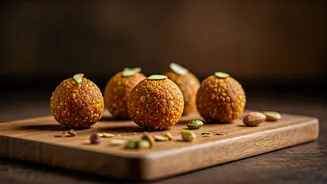
Finally, integrate the puffed, fried gond into the main laddu mixture. Mix everything thoroughly to ensure even distribution of all components. While the combined mixture is still warm – a critical timing element – begin shaping it into small, round laddus using your hands. The warmth allows the mixture to be pliable and hold its form effectively. This final stage brings all the carefully prepared elements together, allowing you to create the individual sweet treats that are ready to be enjoyed.
Artisan's Key Advice
Heeding expert advice can significantly enhance your gond laddu creation. A crucial tip from artisans emphasizes the paramount importance of properly roasting the wheat flour and khoya in ghee; this process dictates the final flavor and aroma. Furthermore, they stress that the gond must be fried until it achieves full puffiness, a step that directly impacts the crispness and lightness of the finished laddus. Adhering to these detailed instructions from experienced makers ensures you achieve an authentic and delicious result, capturing the true essence of this traditional winter sweet.