
Visuals of Contradiction
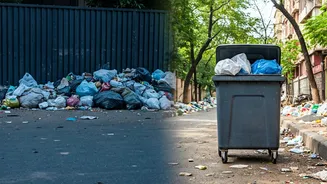
The viral video captured a stark contrast that quickly went viral: orderly, clean dustbins standing out against heaps of uncollected garbage. This juxtaposition,
which occurred in Delhi's Chandni Chowk, immediately prompted a strong reaction from viewers. They questioned the very definition of civic sense and the apparent failure of waste management systems. The video served as a powerful visual representation of the larger problem the city battles with daily. This prompted a strong reaction from viewers. Social media users expressed their disappointment, criticizing the ineffective approach. The public discussions, triggered by the video, quickly shifted towards wider issues, including cleanliness drives. People began raising concerns about the city's cleanliness, the efficiency of its garbage disposal systems, and the shared responsibility of maintaining a hygienic environment. The video’s impact demonstrates the effectiveness of such visuals in making an important point.
Public Outcry and Anger
The reactions online were swift and direct. Many people showed open anger and frustration about the state of affairs in Delhi. Social media platforms became filled with expressions of disapproval. The prevailing sentiment was one of deep disappointment, with many individuals denouncing the alleged negligence. People pointed out the clear lack of civic responsibility, the poor state of the city's cleanliness initiatives, and the inefficiency of municipal services. Others extended this anger to the existing waste management protocols. Many argued that the authorities weren't doing enough to keep the city clean, leading to persistent piles of trash in public areas. The online debate underlined the importance of accountability, the need for better waste management strategies, and the urgent need for a collective commitment to keeping public spaces clean.
Systemic Waste Management
The viral video opened discussions about the larger challenges with waste management in Delhi. A critical aspect discussed revolves around the current systems and their effectiveness. Many critics pointed out the insufficiencies of the garbage disposal infrastructure, which, it was argued, contributed to the ongoing waste accumulation. Concerns were also voiced regarding the logistics of waste collection. People raised questions about the frequency and efficiency of garbage pickups, the placement of collection points, and the procedures for waste segregation. These structural and logistical problems are important in causing the visible trash issues. There was a general consensus on the need to improve existing waste management systems in order to efficiently deal with these challenges. Discussions highlighted the need for better management of waste and the integration of sustainable waste management strategies.
Civic Duty and Responsibility
The debate sparked by the video extended beyond infrastructural concerns. It included questions about civic responsibility and the role of the public in maintaining the cleanliness of public spaces. Many commentators underscored the importance of responsible waste disposal, emphasizing that individuals should do their part to reduce littering. The discussions highlighted the importance of shared responsibility in creating a clean environment. They encouraged people to think of themselves as active participants in the upkeep of their surroundings. Calls for public awareness campaigns were widespread, which were intended to teach the public about appropriate waste disposal methods. The discussions also showed the link between individual actions and their wide impact, thereby enhancing the importance of civic awareness.
Looking Ahead: Solutions
The viral video served as a wake-up call, emphasizing the need for both immediate and long-term solutions. Experts and concerned citizens proposed a variety of measures to deal with the waste problem. Some called for the adoption of innovative waste management technologies, which included waste-to-energy plants. Others advocated for improved garbage collection and disposal infrastructure, recommending more efficient systems. A consensus emerged on the importance of implementing a combination of strategies, which included public awareness campaigns, more efficient waste management systems, and a commitment to civic responsibility. The goal is to develop a cleaner, healthier, and more sustainable urban environment. The discussions showcased the importance of a comprehensive and community-based approach. The need for continuous collaboration between citizens, government bodies, and environmental organizations was also emphasized.




![[WATCH] 'Real Madrid, Ramadan and rest' - Mohammed Siraj how last-minute World Cup call-up changed February plan](https://g-mob.glance-cdn.com/public/fc/image/ByYT_LEmlrD0.webp)