






Why Fake Nests Work
Wasps are inherently territorial creatures, and a key instinct for them is to avoid areas that are already claimed by other wasp colonies. By introducing
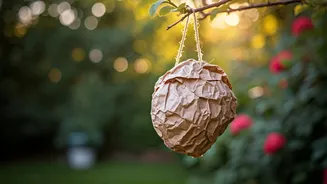
a replica of a wasp nest, you're effectively creating a visual deception. This decoy signals to incoming wasps that the territory is occupied, thereby discouraging them from establishing their own nests in your vicinity. This natural avoidance behavior makes the fake nest a remarkably effective, hands-off solution for keeping these insects at bay. Beyond its practical application in pest control, this method is also incredibly budget-friendly, offering a substantial alternative to repeatedly purchasing expensive wasp sprays. Furthermore, by employing this passive deterrent, you significantly reduce the risk of accidental stings, as it requires no direct interaction with the wasps or their potential nests.
Crafting Your Nest
Creating your own faux wasp nest is a straightforward and economical method to ward off wasps from your home and outdoor relaxation areas. This project is also an enjoyable arts and crafts activity that can be undertaken with family members who appreciate creative endeavors. The materials required are minimal: a pair of scissors, some string, tape, and a readily available brown paper bag. Begin by fully unfolding the brown paper bag to create a flat surface. Next, trim this paper to a desired rectangular size, which will form the base of your decoy nest. Once you have the appropriate dimensions, crumple the paper into a ball. This action helps to mimic the irregular shape and texture characteristic of a real wasp nest. Secure this crumpled shape with tape to ensure it maintains its form. Finally, use the remaining tape to attach a length of string to your paper creation, allowing you to hang it strategically on your porch, patio, or any other location where you wish to deter wasps.
Additional Wasp Prevention
Beyond the DIY fake nest, several other straightforward strategies can help minimize wasp presence around your home. Maintaining a tidy garden is crucial, as it helps reduce the available prey for wasps. Allowing vegetables or fallen fruit to rot can attract other insects, which in turn draws wasps seeking a food source. Another economical approach involves preparing a simple solution of soap and water. Spraying this mixture directly onto any visible wasp nests can be an effective way to disrupt their activity. While commercial wasp sprays are an option, always prioritize safety. If you choose to use store-bought sprays, ensure you wear protective clothing, including goggles, to prevent accidental self-exposure and to shield yourself from any wasps that might perceive the spraying as a threat. These layered approaches can significantly enhance your ability to enjoy outdoor spaces without the nuisance of wasps.