






Urban Echoes & Night Calls
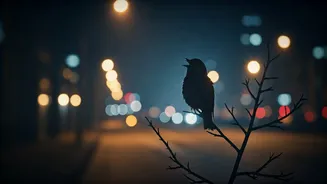
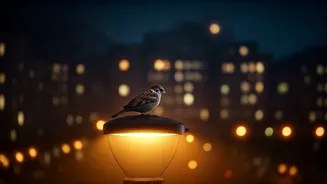
While birds are generally programmed for nocturnal rest, the modern urban landscape often triggers unexpected late-night vocalizations. This phenomenon,
particularly noticeable in cities, arises from disturbances such as sudden noises and pervasive artificial lighting, which can disrupt their natural light-dark cycles and consequently impact breeding behaviors. Species that demonstrate greater adaptability to urban environments are more inclined to engage in vocal activity after midnight. The constant hum and visual interference of city life can also make it more challenging for birds to communicate effectively during daylight hours, pushing them to seek out the relative quiet of the night for crucial interactions. This adaptation highlights the remarkable resilience of avian species in navigating human-dominated environments, showing how they modify their innate behaviors to suit new conditions.
Territory and Romance
One of the primary motivations for birds to sing when darkness falls is the imperative of defending their territory. For numerous species, the night provides a less competitive platform to proclaim their presence and issue warnings to potential rivals or intruders. This behavior is especially pronounced in built-up urban areas where the artificial glow of city lights can significantly confuse natural circadian rhythms, prompting birds to shift their singing schedules. The continuous ambient noise of urban settings can also make daytime communication difficult, thus encouraging them to utilize quieter nocturnal periods for conveying vital messages. Simultaneously, mate attraction plays a critical role. In certain bird populations, males will vocalize throughout the night to entice females, particularly during the crucial breeding season. This strategy allows them to distinguish themselves from competitors and effectively signal their readiness and suitability as partners. Furthermore, the cover of darkness can offer a heightened sense of security, enabling them to sing without the persistent anxiety of becoming prey to visual predators.
Specialized Night Singers
Certain bird species have evolved nocturnal singing as an intrinsic part of their behavioral repertoire. The iconic common nightingale, for instance, is renowned for its elaborate and melodious songs, which it frequently performs under the cloak of night. While the precise evolutionary reasons for this behavior are still subjects of ongoing scientific inquiry, current theories strongly link it to a dual purpose of reinforcing territorial claims and enhancing the prospects of attracting mates. These birds' commitment to nocturnal vocalization underscores the diverse strategies employed by different species to fulfill essential life functions. Understanding such specialized behaviors provides a deeper appreciation for the complex communication systems that exist within the avian world, demonstrating how different species have adapted unique approaches to survival and reproduction.
Environmental Triggers Unveiled
Beyond innate behaviors and social drives, external environmental cues can also serve as triggers for avian vocalizations during nighttime hours. Subtle shifts in atmospheric conditions, such as variations in temperature or humidity, or even the presence of artificial light sources, can prompt certain birds to sing. For example, a noticeable drop in temperature might instigate a bird to vocalize, potentially as a means of conserving body heat or to signal its location to other members of its species in its vicinity. These environmental influences highlight how responsive birds are to their surroundings, utilizing vocal communication as a dynamic tool to navigate and respond to immediate ecological conditions, even in the absence of daylight. This adaptability ensures their continued interaction and survival in diverse and ever-changing environments.