




The West-Facing Myth
Dispelling the myth that west-facing homes are inherently inauspicious, Vastu Shastra associates this direction with Lord Varun, the deity of water and
the sky. This area signifies high energy and significant gains, making it ideal for professionals such as business owners, lawyers, and individuals aspiring for financial growth. However, the west also experiences intense afternoon sun, which can make the home uncomfortable if not designed thoughtfully. Adhering to Vastu principles is crucial to harness the positive aspects, ensuring the home remains a pleasant sanctuary while promoting financial prosperity and stability. The key lies in understanding and implementing the directional energies to create a balanced and thriving environment within the residence.
Entrance Placement Essentials
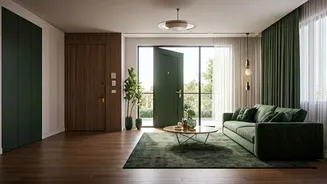
The main entrance, often referred to as the 'mouth' of the house, plays a pivotal role in the flow of energy. For a west-facing home, strategic placement is paramount, guided by the pada map. The optimal locations for the main door are padas 3, 4, and 5, which are centered or slightly towards the north-west. This placement facilitates the influx of success and positive opportunities. Conversely, positioning the entrance in the south-west corner is strongly discouraged, as it can lead to financial instability and health issues. A grand, sturdy, and well-illuminated main door is recommended to signify a welcoming and auspicious entry, enhancing the home's overall energetic balance and attractiveness.
Strategic Room Layout
Optimizing room placement within a west-facing house involves placing heavier elements towards the rear of the property to manage energy flow effectively. The master bedroom should ideally be situated in the south-west corner, as this area promotes stability and grounding. Given the intense afternoon sun often experienced in west-facing homes, thick walls in this corner can help keep the room cooler. Sleeping with the head facing south is recommended for better heart health and sleep quality. The kitchen, associated with fire, should be in the south-east; if this isn't feasible, the north-west serves as an acceptable alternative. It is crucial to avoid placing the kitchen in the north-east, as this can create energetic clashes and lead to domestic discord. The living room should occupy the north or east, while the central area, the Brahmasthan, must remain open, well-lit, and free from heavy furniture or structural obstructions.
Color and Decor Choices
Colors significantly influence the energy and temperature regulation within a west-facing home, particularly in managing the sun's heat. Light, reflective colors such as white, silver, and light blue are highly recommended. White, in particular, is excellent at deflecting the intense evening sun and fostering a serene atmosphere. Furthermore, applying the 'weight' principle in decor is beneficial: position heavier furniture pieces against the south and west walls, while keeping the north and east walls light and uncluttered. This arrangement helps to balance the home's energetic distribution, mitigating the impact of direct sunlight and promoting a more comfortable living environment. Such thoughtful choices contribute to a harmonious and well-tempered living space.
Vastu Remedies for Defects
Even if a west-facing house has existing Vastu defects, several remedies can be implemented without major renovations. For an unfavorably positioned entrance, burying lead metal strips at the threshold can help realign the energy flow. Planting dense, leafy trees like palms on a west-facing balcony can act as a natural buffer against harsh sunlight and filter negative energies. To stabilize spaces that feel unsettled, particularly in the southwest corner, placing lead pyramids can be effective in grounding the area. These practical solutions offer a means to correct energetic imbalances and enhance the overall well-being and prosperity of the home, making it more aligned with Vastu principles.