




EC's Election Actions
Following the announcement of the election schedule, the Model Code of Conduct (MCC) immediately came into effect, empowering the Election Commission (EC)
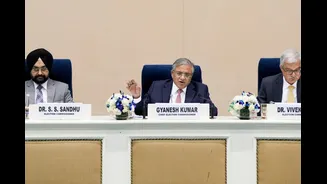
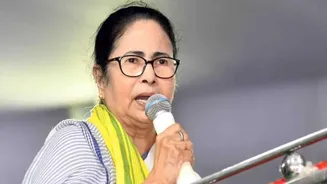
to begin deploying essential personnel and appointing officers to ensure the elections proceed smoothly. The MCC, which governs the conduct of political parties and candidates, remains active until the final results are declared. In the initial three days of its implementation, the EC initiated a series of appointments and transfers involving senior IAS and IPS officers across several states, including West Bengal, Assam, Kerala, and Tamil Nadu. West Bengal experienced the most significant reshuffling of personnel. In response, Chief Minister Mamata Banerjee expressed strong disapproval, characterizing the transfers as 'sweeping' and formally conveyed her deep concern and surprise in a letter to the Chief Election Commissioner (CEC), Gyanesh Kumar. She urged the EC to refrain from adopting such unilateral measures in the future, highlighting a clear point of contention between the state government and the EC.
Scope of EC's Transfers
The Election Commission's actions have involved the significant reshuffling of key administrative and police officials. In West Bengal alone, the EC has overseen the transfer of at least 21 senior IAS and IPS officers. This includes the state's Director General of Police (DGP) and the Kolkata Police Commissioner, positions of considerable influence during elections. While the specific justifications for these transfers were not explicitly detailed in the official orders, CEC Gyanesh Kumar stated that the Election Commission is dedicated to facilitating elections that are transparent, free from fear, violence, and inducements. He emphasized this commitment in a written statement accompanying the transfer orders. Beyond West Bengal, the EC has also made changes in other states. In Assam, ten senior officers were transferred, comprising five Superintendents of Police and five District Election Officers, who also serve as District Magistrates. Kerala saw five such transfers, and Tamil Nadu had four effected between Monday and Wednesday, indicating a broad application of the EC's authority across multiple states during this electoral period.
Legal Basis for Transfers
The legal framework governing the transfer of officials during election periods is rooted in Section 13CC of the Representation of the People Act, 1950. This section stipulates that any officer involved in election-related tasks, including the preparation, revision, and correction of electoral rolls, as well as the conduct of elections, is considered to be on deputation to the Election Commission. This means that during their engagement in these electoral duties, such officers fall under the direct control, superintendence, and disciplinary authority of the Election Commission. Although this provision was introduced in 1989, there have been historical disagreements between the EC and the central government regarding the precise meaning of 'discipline' in this context. To resolve these ambiguities, the Election Commission, under the leadership of T.N. Seshan, approached the Supreme Court in 1993 for clarification. This led to a settlement agreement between the EC and the government in 2000, which explicitly granted the EC the power to suspend and substitute officials who are found to have derelicted their duties. It is under the authority derived from these provisions that the EC continues to effect transfers of officers during election periods and electoral roll revision processes.
Mamata Banerjee's Objections
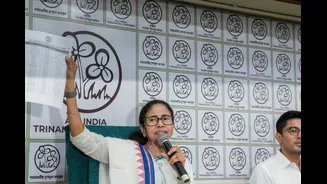
Shortly after the initial transfer orders were released, West Bengal Chief Minister Mamata Banerjee lodged a formal protest by writing to the Chief Election Commissioner. She characterized the extensive changes as 'sweeping' and argued that they were implemented without any substantiated reasons or specific allegations of misconduct or lapses on the part of the affected officials concerning the election process. While acknowledging the Election Commission's inherent powers to take necessary actions, Banerjee pointed out a historical practice where the commission typically consulted with the state government before undertaking such significant transfers. Commonly, the EC would request a panel of suitable officers from the state government from which to make its selections for replacements. However, she stressed that there is no legal mandate requiring this consultation. Banerjee expressed her profound dismay and surprise that the top administrative leaders of West Bengal were removed so rapidly after the announcement of the General Election, describing the action as arbitrary and lacking any attempt to seek nominations from the state government.
Historical Transfer Precedents
The practice of the Election Commission transferring officials during election periods is not an unprecedented occurrence; rather, it's a recurring aspect of election management. Sources within the EC indicate that such transfers are often implemented to ensure a level playing field by removing individuals who may be perceived as having undue proximity to a particular political party or dispensation. A notable instance occurred during the 2024 Lok Sabha elections when the EC transferred the then-West Bengal DGP, Rajeev Kumar, for the duration of the polls. Banerjee subsequently reinstated him after the election concluded. It is worth noting that Rajeev Kumar later joined the TMC and was elected to the Rajya Sabha on its ticket. Furthermore, during the same 2024 general elections, the EC also removed the Home Secretaries of six different states, including significant states like Uttar Pradesh and Gujarat, demonstrating a pattern of intervention in key administrative roles across various regions when deemed necessary for electoral fairness.