





Forum Launch: Partnership
The Innovate Space: Finance Forum, an initiative jointly organized by the Space Foundation and the Texas Space Commission, was successfully held. This
partnership underscored the growing importance of financial strategies in advancing space exploration and related technological innovations. The forum's structure allowed a variety of stakeholders, including investors, space technology developers, and government officials, to converge and exchange ideas on pertinent subjects such as investment models, future space ventures, and emerging technological trends. This provided a crucial platform for networking and the formation of potential alliances between businesses and organizations, while also facilitating knowledge transfer about financial challenges and prospects in the space sector.
Data's High Quality Praised
NASA's assessments have consistently highlighted the high caliber of PlanetiQ's radio occultation data. The importance of the data quality reflects the critical requirement for accuracy in analyzing atmospheric conditions and weather models on Earth and in space. Radio occultation technology, through the analysis of radio signals as they pass through Earth's atmosphere, delivers significant data that allows for in-depth weather forecasting and global climate studies. The fact that the National Aeronautics and Space Administration lauded the precision of the data indicates its use in research, forecasting, and the progress of space technology. The commendation reinforces PlanetiQ's position as a reliable source of essential, high-quality data.
Space Debris Conference
The second iteration of the Space Debris 2026 Conference was conducted, drawing participation from 75 nations. The international collaboration signifies the global worry about space debris, a critical obstacle for the sustainability of space activities. Participants from various nations likely gathered to address the issues associated with the accumulation of debris in Earth orbit, examine mitigation strategies, and establish international collaboration. The conference's broad participation from 75 nations points to the urgency and complexity of space debris management. The initiative promoted the exchange of ideas, the evaluation of new technologies, and the creation of regulatory frameworks, all of which are essential for guaranteeing the long-term viability of space exploration and safeguarding vital space infrastructure from possible harm.
Payload Release Systems
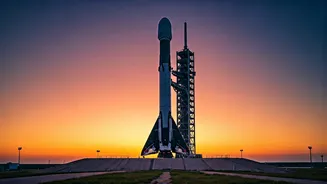
The EBAD PRM Payload Release Module Family has showcased its scalable, low-shock separation capability during the Falcon 9 Twilight Rideshare Mission. This successful demonstration highlights advancements in deployment systems, which are crucial for the deployment of a variety of satellites and payloads into orbit. The family of modules provides dependable and scalable methods to deploy payloads, allowing for a variety of missions and operational needs. The Falcon 9 Twilight Rideshare Mission's use of this innovative technology showcased its efficiency and usefulness in providing a smooth and secure separation. Such developments are essential for increasing the efficiency and decreasing the hazards associated with space missions, supporting the continuous development and deployment of satellite technology.