






The Data Deluge
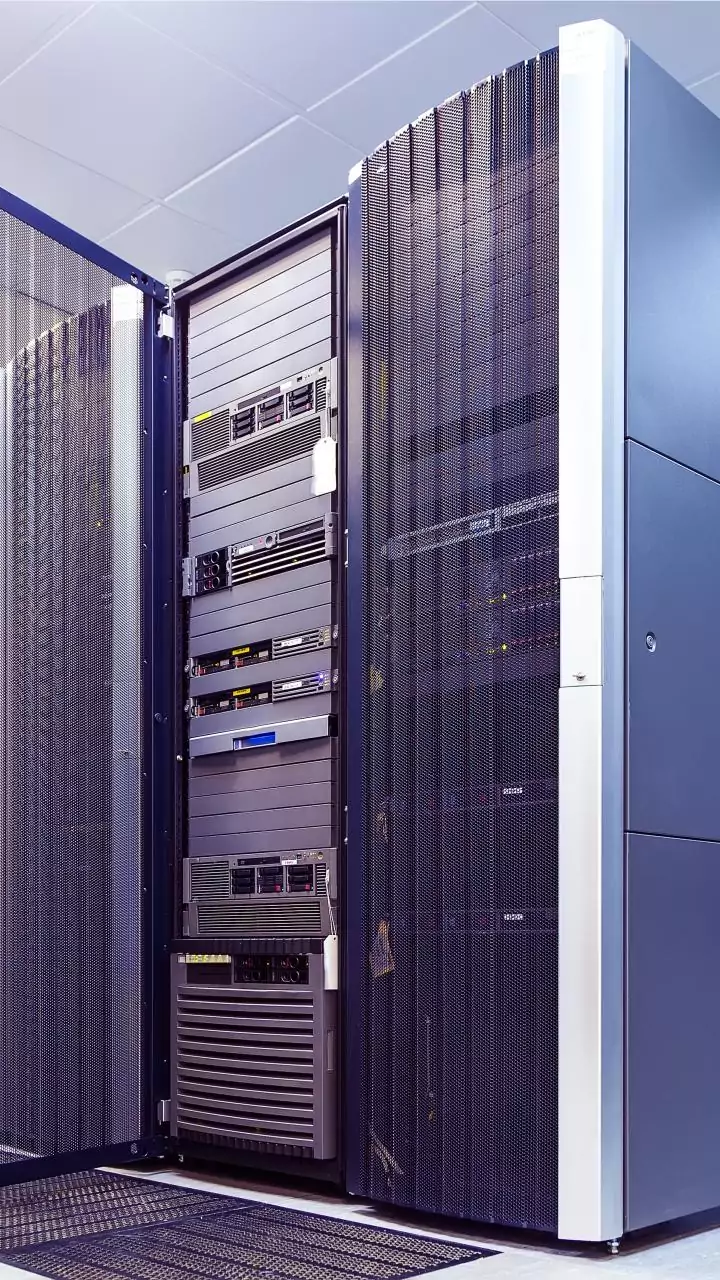
Modern data centers are behemoths, consuming vast amounts of power and managing petabytes of data. A typical hyper-scale facility houses thousands of servers,
spanning hundreds of acres, and handles trillions of data packets daily. This immense scale is driven by the relentless growth in data, exacerbated by AI workloads and the need for efficient processing. As these centers expand, public acceptance becomes a significant hurdle, making efficiency in energy consumption, cooling, latency, and physical footprint absolutely critical for economic viability, performance, and environmental responsibility. Addressing these challenges is paramount for the continued growth and sustainability of the digital infrastructure that underpins our connected world.
Beyond Packet Switching
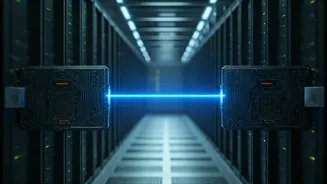
The sheer volume of data being switched, currently in the trillions of packets per second, necessitates a paradigm shift beyond conventional methods. Traditional packet-based switching struggles to keep pace with the demands for reduced cost, enhanced performance, smaller size, and improved sustainability. Optical Circuit Switching (OCS) emerges as a revolutionary solution. OCS directly routes optical data beams without the inefficient opto-electrical-opto conversion, drastically cutting down signal loss, component count, power consumption, and heat generation. This advancement mirrors the impact of Pulse Code Modulation (PCM) in revolutionizing voice call switching decades ago, offering a leap in scalability and efficiency for data center networks.
Emerging Optical Switching Technologies
Current advancements in optical switching are exploring innovative approaches to meet the escalating demands. One notable technology involves MEMS mirror arrays, offering dynamic network reconfiguration for load balancing. While effective, these systems can introduce insertion loss and have limitations in flexibility due to the mechanical nature of MEMS. A more promising direction involves fully solid-state solutions utilizing advanced optical switch matrix designs integrated with silicon photonics. These systems promise high reliability, rapid reconfiguration speeds, and scalability. The digital control of thousands of switches with simple voltage levels makes these designs particularly attractive for the dense switching fabrics required for next-generation optical circuit switching in data centers.
Metamaterials for Laser Steering
A groundbreaking development in optical switching is the use of Light Control Metasurfaces (LCM). This metamaterials-based technology enables the steering of laser beams without any moving parts, leveraging low-cost silicon CMOS fabrication. Pioneers in this field are developing solutions for both 1D and 2D laser scanning at wavelengths commonly used in high-bandwidth communications, such as 1310 and 1550 nm. The ability to precisely control light at the nanoscale opens up possibilities for highly dynamic mesh networking within data centers, offering significant advantages in terms of latency, size, and power consumption. This technology’s programmability and wide scanning angles make it an ideal candidate for future data center architectures.
The Future of Data Switching
The convergence of AI, cloud computing, and the exponential growth of data demand a fundamental evolution in data center infrastructure. Optical circuit switching, especially through solid-state laser steering technologies like LCM, represents a critical step forward. These innovations promise to dramatically improve bandwidth, reduce latency, and enhance energy efficiency, all while minimizing the physical footprint of data centers. By eliminating the need for opto-electronic conversions and enabling highly agile, programmable optical paths, these new switching methods are poised to revolutionize how data is managed and transmitted, ensuring the continued scalability and sustainability of our digital world.