




The Shift to Electric
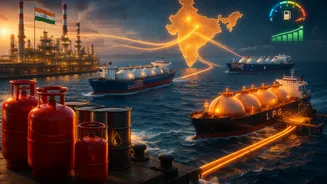
Recent geopolitical events, particularly concerning the conflict in West Asia, have underscored India's vulnerability to fuel import disruptions. This
has led to significant LPG shortages and inflated prices on the black market, prompting a noticeable pivot towards electric cooking alternatives in many Indian households. Online retailers have witnessed an unprecedented surge in demand for both induction and infrared cooktops, with induction models seeing an astonishing eighteen-fold increase in sales compared to pre-conflict figures. The government has also taken note, initiating inter-ministerial discussions aimed at boosting the production of induction heaters and their compatible cookware. While this move offers a potential respite from LPG dependency and can ease household budgets, it simultaneously introduces a new and pressing concern: an escalating demand for electricity, which arrives at a critical juncture as the power grid prepares for the heightened loads anticipated during the hotter-than-usual summer months.
Induction Cooktop Mechanics
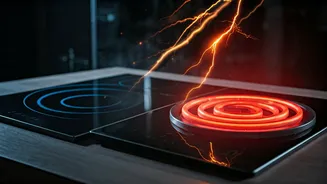
Induction cooktops are emerging as a favored substitute for traditional gas stoves, largely due to their comparable initial cost to a single LPG cylinder on the black market, typically ranging from Rs 3,000 to Rs 4,000. Their operational principle bypasses the open flame characteristic of gas burners; instead, they employ electricity to directly heat the cooking vessel. This is achieved by generating a rapidly oscillating electromagnetic field. When a ferromagnetic metal pan is placed on the cooktop's surface, it becomes part of this magnetic field. The inherent electrical resistance of the cookware then creates frictional forces between the metal and the field, transforming this kinetic energy directly into thermal energy for cooking. However, this method necessitates specialized cookware; only ferromagnetic materials like cast iron or specific grades of stainless steel, which respond to magnetic fields, are compatible. The necessity for these specialized, often more expensive, pots and pans can be a deterrent for households seeking only a temporary or partial switch to electric cooking.
Infrared Cooktop Functionality
Infrared cooktops are also experiencing a surge in popularity, particularly because they circumvent the cookware compatibility issues associated with induction models, despite their generally higher price point. Unlike induction, infrared cooktops operate by utilizing an electric heating coil situated beneath a glass surface. This coil heats up intensely, similar to a toaster's heating element, and emits infrared radiation. This invisible form of electromagnetic energy travels through the glass and is absorbed by the base of any type of cookware, whether it's steel, aluminum, glass, or ceramic. The absorbed energy causes the molecules within the cookware to vibrate rapidly, generating heat that effectively cooks the food. The increased demand for infrared cooktops is evident in sales figures, with Amazon India reporting a nearly fourfold jump in their sales compared to pre-war levels, highlighting their growing appeal in the current market.
Efficiency and Heat Control
When comparing the two electric cooking technologies, induction cooktops generally demonstrate superior energy efficiency. They are capable of converting an impressive 85% to 95% of the electricity consumed directly into heat within the vessel, thanks to the electromagnetic field's direct heating mechanism. In contrast, infrared cooktops operate at a lower efficiency, typically between 70% and 80%. This is because heat is first generated in the coil, then transferred to the glass surface, and finally to the cookware, with some energy inevitably lost to the surrounding environment. Consequently, an induction cooktop tends to use slightly less electricity for equivalent cooking tasks. A more significant differentiator, however, lies in their heat regulation capabilities. Induction cooktops utilize advanced power electronics, such as pulse-width modulation or frequency adjustment, for precise heat control, maintaining efficiency even at low simmer settings. Infrared cooktops, conversely, often employ phase-angle control, which involves switching the heating element on and off cyclically. While this method is simpler, it distorts the electrical waveform and can negatively impact the power factor, necessitating the grid to supply additional current that does not contribute to useful heat, thereby increasing losses and reducing overall efficiency. Widespread use of this method could strain local distribution infrastructure.
Grid Infrastructure Strain
The escalating adoption of electric cooktops, while a positive step towards reducing LPG dependency, presents a substantial challenge to India's electricity grid. Experts are cautioning that the primary concern is not merely the overall increase in electricity consumption, but rather the timing of this demand. Cooking activities are heavily concentrated during the morning and evening peak hours. Even a moderate increase of 3 to 5 Gigawatts during these periods can exert significant pressure on local distribution networks, which are often not designed to handle such sudden and localized spikes in load. This localized demand surge can lead to the overloading of critical infrastructure, such as distribution transformers, potentially resulting in power outages. If this trend of switching to electric cooking continues long-term, it will necessitate substantial infrastructure upgrades and a robust strategy for sourcing additional power to meet the persistent rise in demand, especially as India braces for a hotter-than-usual summer and aims to rely more heavily on coal-based power to meet peak demand.