







Winter's Icy Transformation
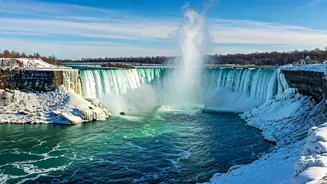
During periods of intense cold, Niagara Falls undergoes a dramatic metamorphosis, earning it the moniker 'Frozen Falls'. While the sheer force of the water,
which typically plunges over 3,000 tons per second, prevents a complete freeze-over, sub-zero temperatures and a natural reduction in water flow create a breathtaking visual display. Icicles, like delicate crystal formations, begin to adorn the edges of the cliffs, and the constant spray of mist hardens into a frosty coating, enveloping the entire landscape in a serene, white veil. This phenomenon transforms the powerful cascades into a scene reminiscent of a fairytale, where frozen bridges can even form across the Lower Niagara River, adding to the magical atmosphere. The effect is a testament to nature's ability to create beauty even in the harshest conditions, offering a unique perspective on one of the world's most famous natural wonders.
Viewing the Frozen Wonder
For those eager to witness the 'Frozen Falls' firsthand, the U.S. side of Niagara offers prime vantage points. Prospect Point provides an exceptional overlook of the American Falls, allowing for a clear view of the icy spectacle. Additionally, the Observation Deck, when operational, offers an even more immersive experience, bringing visitors closer to the frozen artistry. The reason the U.S. side is often preferred for viewing this phenomenon is due to the stronger water flow on the Canadian side, which mitigates the formation of such extensive ice structures. The 'Frozen Falls' effect is most pronounced when water flow is naturally diminished, a common occurrence in winter as up to 75 percent of the water feeding the falls from Lake Erie is diverted for hydroelectric power generation. Coupled with consistent sub-zero temperatures, often in the single digits and teens, the conditions are set for this enchanting display.
A Historic Full Freeze
While the 'Frozen Falls' effect is a recurring winter event, a truly complete freeze of Niagara Falls is an exceptionally rare occurrence. The most notable instance on record took place in March 1848. During this period, extensive ice fields accumulated on Lake Erie, effectively blocking the primary source of the Niagara River. This drastic reduction in water supply, combined with frigid March temperatures, was sufficient to halt the falls entirely, causing them to freeze solid. This historic, complete freeze, though temporary, lasted for approximately 30 hours. Remarkably, during this brief window, the frozen basin was solid enough for individuals to ride horses across it and even ice skate over the riverbed, a testament to the extreme conditions of that particular winter.
Year-Round Access & Park Enhancements
Niagara Falls remains an accessible natural wonder throughout the year, with the park open daily regardless of the season. A significant advantage of visiting during winter is the noticeable reduction in crowds, allowing for a more peaceful and personal experience of the falls. Furthermore, exciting developments are underway at Niagara Falls State Park, the oldest state park in the United States. This spring, the park is set to absorb two neighboring state parks, further enhancing the visitor experience and encouraging longer stays by integrating nearby attractions and offerings. This consolidation aims to improve access and create a more seamless and enriching journey for all who come to admire the majestic beauty of Niagara Falls and its surrounding natural landscapes.