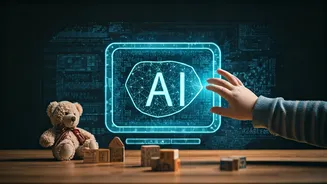








The AI Era's Human Imperative
The rapid advancement of artificial intelligence presents a unique challenge: maintaining our human essence amidst technological ubiquity. While machines
excel at processing vast amounts of data and executing tasks with unparalleled efficiency, they fundamentally lack the capacity for genuine empathy, nuanced moral judgment, and deep emotional understanding. These are the distinctively human traits that are becoming increasingly vital. Reports indicate that even as analytical thinking and technological prowess grow in demand, attributes like empathy, effective leadership, and social influence remain crucial human capabilities that AI cannot replicate. Therefore, fostering these core human skills is not merely supplementary but essential for navigating the complexities of an AI-driven world, especially in shaping future generations through education and guidance.
Cultivating Core EQ
Children today are growing up in an environment where AI systems offer instant responses and simulated interactions. Professor DC Kiran emphasizes that emotional intelligence is not something that can be automated; it is meticulously developed through lived experiences. This involves active listening, engaging in respectful disagreements, thoughtful reflection, and the crucial ability to recognize and understand one's own emotions and those of others. These developmental processes require dedicated time, focused presence, and intentional nurturing from caregivers. Research corroborates this, noting that while AI can mimic conversational empathy, it lacks the authentic emotional depth that stems from human interaction and real-world social context. Thus, the development of a strong emotional foundation relies on meaningful engagement and relationships, not on digital surrogates.
Balancing Tech and Humanity
As educational institutions increasingly integrate digital tools, the roles of both educators and parents become more critical in striking a balance. Professor Kiran advocates for a dual approach: teaching children how to proficiently use technology must be intrinsically linked with instructing them on how to build meaningful relationships. This includes developing the ability to connect with other people, navigate uncertainty gracefully, and engage with complex situations. Skills such as empathy, ethical decision-making, and self-regulation are not optional extras; they are foundational elements for effective learning and becoming responsible global citizens. In an era that often prioritizes speed and efficiency, it's imperative to continually reaffirm the indispensable value of human connection. Emotional intelligence empowers individuals to collaborate effectively, lead with integrity, and confront ambiguity with resilience, positioning these as core competencies for future success.
Anchoring in the Real World
Preparing children for an AI-influenced future means focusing on what makes us uniquely human, rather than attempting to compete with machines. Empathy, deep reflection, and sound moral discernment are highlighted as qualities that will define tomorrow's leaders. Nurturing these attributes through education serves to preserve not only individual relevance but the very essence of humanity. Parents face the significant task of grounding their children in the tangible realities of the physical and emotional worlds while simultaneously equipping them for a digital landscape. While technological innovations may evolve and become obsolete, the foundations of human connection and emotional well-being remain enduring. It's vital for children to understand that digital advancements are the product of human ingenuity, not a substitute for it, thereby ensuring they remain creators and critical users of technology.
Fostering Resilience and Ethics
In learning environments increasingly shaped by AI, educational systems must prioritize ethical reasoning, empathy, and human connection alongside digital literacy. Building emotional resilience is key, starting with nurturing a child's Emotional Intelligence (EQ). In our fast-paced 'click-and-get' culture, parents should actively encourage delayed gratification. True resilience is forged through overcoming challenges; providing instant satisfaction for every desire can impede a child's ability to cope with life's inevitable difficulties. Rewards should be earned through effort, instilling the understanding that genuine satisfaction comes from hard work. Furthermore, 'digital intelligence' must be grounded in ethics. It's insufficient to be merely tech-savvy; children need to grasp the implications of AI, learning to utilize it as a creative tool rather than a dependency. Balancing screen time with 'soul time'—engaging in physical activities and real-world problem-solving—ensures children become innovators, not passive consumers, with technology serving human experience and the heart remaining their ultimate guide.