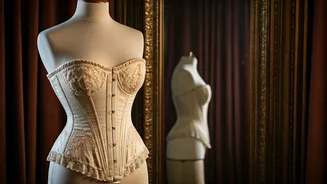

Origins: 16th Century
The corset's story began in Europe during the 16th century, primarily in Spain and France. These early versions, known as 'stays,' had a different purpose
than the hourglass silhouette we often associate with corsets. Instead of emphasizing curves, stays were designed to create a flattened torso and a rigid, cone-like shape. This early form of the corset was more about controlling the body's natural shape and was a key element in the fashionable silhouette of the time, especially among the upper classes. The construction methods involved stiff materials like wood and whalebone, and the focus was on a stiff, almost armor-like effect rather than the later emphasis on cinching the waist.
Royal Fashion Statements
Throughout the reigns of European queens and nobility, corsets became powerful symbols of status and discipline. Women within royal courts meticulously adopted tightly structured corsets, showcasing elegance, poise, and their elevated social standing. The restrictive nature of the corset itself mirrored the constraints imposed by societal expectations. The use of corsets extended beyond mere aesthetics; they were an outward manifestation of one's adherence to decorum and social norms. The rigid form promoted a specific posture considered refined and aristocratic, furthering their role as a clear distinction of class and privilege. These corsets were often heavily embellished with intricate details, reflecting the wealth and influence of their wearers and further establishing the corset as an essential element of royal and aristocratic fashion.
Victorian Era Tight Lacing
The Victorian era witnessed a significant shift in corset design and its role in fashion. Corsets became increasingly fitted and curvier, which significantly emphasized the hourglass figure. A popular practice of the time was tight lacing, where corsets were laced extremely tightly to dramatically reduce the waist size. This often led to striking visual transformations and sparked widespread debates concerning women's health and mobility. Tight lacing, while enhancing the desired shape, put considerable pressure on the internal organs and restricted movement. Medical professionals and reformers began to raise concerns about the detrimental impacts of tight lacing on women's well-being. These issues became a major focus, contributing to discussions about fashion’s physical consequences.
Health Debates Emerge
By the late 1800s, a growing number of doctors and social reformers openly criticised corsets due to their impact on women's health. Concerns focused on the restriction of breathing and the displacement of internal organs. This criticism gave rise to the dress reform movement, a period advocating for more comfortable clothing that would be less detrimental to women's health. This movement questioned prevailing beauty standards that prioritized aesthetic shape over well-being. Advocates promoted looser clothing styles, aiming to liberate women from fashion’s health risks. They sought a shift in societal perceptions, arguing that beauty should not come at the expense of women’s physical health and comfort. The debates highlighted the clash between fashion ideals and practical health concerns, significantly impacting clothing trends.
Decline in Early 20th
As the 20th century began, and women's roles within society evolved, corsets gradually faded from their position as a daily staple. Several factors contributed to this decline, including World War I, which brought about practical changes in clothing. Also, there was a shift in fashion overall, and the emergence of bras and girdles provided alternative forms of support and shaping. The changing societal landscape, including increased labor participation by women and a growing focus on comfort and freedom of movement, influenced fashion choices. These new undergarments represented a departure from the restrictive nature of corsets, allowing for greater comfort and ease of movement, directly impacting the corset’s place in everyday life.
Corsets in Modern Fashion
Today, corsets have re-emerged as a vibrant statement piece in the fashion world, worn as outerwear and a symbol of self-expression. They're no longer seen primarily as everyday undergarments. They are now embraced as a celebration of self-expression, empowerment, and fashion experimentation. Modern corsets appear in various designs, colours, and materials, allowing wearers to showcase their personal style. This evolution highlights fashion's cyclical nature, with styles reinterpreted over time. Their contemporary use is often seen in high fashion, street style, and alternative subcultures. Corsets, in this new form, reflect a broader acceptance of diverse body shapes and an increasing freedom of personal expression through fashion choices, representing a significant shift from their historical role.