
Non-GPS Navigation
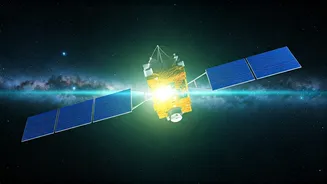
TrustPoint has introduced a groundbreaking navigation system designed for Low Earth Orbit (LEO) satellites, functioning independently of GPS. This innovative
technology offers a reliable solution for satellite navigation, crucial for maintaining orbital position and executing missions. The system promises to enhance precision and operational reliability, which is particularly valuable in environments where GPS signals may be unreliable or unavailable. This innovation represents a step forward in space technology, ensuring more dependable and efficient satellite operations. The development demonstrates a commitment to advancing the capabilities of spacecraft and paving the way for more sophisticated space-based services and applications. This independence from GPS significantly reduces reliance on external systems, boosting the autonomy of satellites.
On-Orbit 5G Tests
Tyvak International's LIDE satellite successfully completed initial on-orbit 5G tests. This marks a significant achievement in integrating advanced communication technologies within space systems. The implementation of 5G capabilities in space has the potential to transform satellite communications, opening up new opportunities for high-speed data transmission and improved connectivity. The success of these tests validates the feasibility of using 5G in space. This has significant implications for future space missions, including Earth observation, scientific research, and advanced communication services. The successful tests point to a future where satellite-based services are faster, more efficient, and better integrated with terrestrial networks. This progress underlines the innovative spirit driving space technology.
SDA TAP Lab Program
The Space Development Agency's (SDA) TAP Lab has opened applications for Cohort 4 of its Catalyst Campus mini-accelerator program. This program is designed to support and accelerate innovative projects in the space sector. It provides resources, mentorship, and opportunities for startups and small businesses to develop and refine their space-related technologies. Such initiatives are crucial for fostering innovation and bringing new ideas to fruition within the space industry. The TAP Lab’s commitment to providing support and access to resources can significantly influence the pace of technological development. The accelerator provides a vital platform for entrepreneurs, facilitating the development of critical space technologies and boosting collaboration. This kind of program also helps to foster the growth of companies contributing to the future of space exploration and utilization.
Autonomous Space Operations
Turion Space Corp. acquired Tychee Research Group to accelerate autonomous space operations and mission engineering. This strategic acquisition points to a growing focus on developing sophisticated autonomous capabilities in space. The integration of Tychee Research Group's expertise will enable Turion Space Corp. to improve its operational efficiency and advance the automation of space missions. This includes enhancing spacecraft autonomy, optimizing mission planning, and improving the overall efficiency of space operations. Autonomous systems promise to reduce costs, enhance mission capabilities, and increase the resilience of space infrastructure. Such efforts are important for the long-term sustainability of space activities and the expansion of human presence in space. The focus on autonomy represents a key trend in the space sector, demonstrating the drive toward more independent and capable space assets.