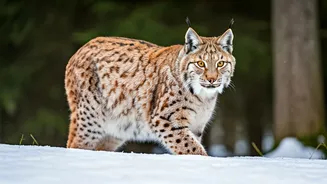









The Elusive Predator
The European lynx, a creature of myth and stealth, holds a special place in the heart of Europe's wild landscapes. Its elusive nature has earned it the nickname
'ghost cat,' as sightings are few and far between. This large cat, with its tufted ears and spotted coat, is a master of camouflage, blending seamlessly into its forest habitat. Its presence is a sign of a healthy ecosystem, where its role as a predator helps maintain balance. The lynx's solitary habits and nocturnal tendencies further contribute to its hidden existence. Their territories can span vast areas, making encounters even rarer. This secrecy contributes to the animal's mystique, making each glimpse of it a treasure. Conservation efforts are crucial to ensure its survival, and its continued presence in the wild enhances the biodiversity and beauty of the European wilderness.
Habitat and Range
The European lynx favors vast, wooded environments that provide ample cover and prey. Its range stretches across various parts of Europe and Asia, adapting to diverse climates and terrains. They thrive in forests, mountains, and even more open landscapes, demonstrating their adaptability. The availability of suitable prey, such as deer, roe deer, and hares, is crucial for their survival within a territory. The lynx carefully selects habitats that offer both shelter and hunting opportunities. Their presence is an indicator of a thriving ecosystem. They often avoid areas heavily influenced by human activity. Their survival depends on the preservation of these crucial habitats, emphasizing the importance of protecting forests and wild spaces. Monitoring the lynx’s range and habitat is critical for understanding their population trends and the impacts of environmental changes.
Rare Photographic Moments
Capturing the European lynx on film is a testament to the dedication and skill of wildlife photographers. The images reveal the animal in its natural setting, providing a window into its private life. These rare photographs offer a glimpse of its agility, hunting prowess, and graceful movements. The images often capture intimate moments, such as a lynx with its cubs or stalking prey. These photographs are important for conservation efforts. They help people appreciate the beauty and fragility of the lynx and its environment. These rare visual records are essential for raising awareness and inspiring conservation action. They highlight the animal's remarkable adaptations and its crucial role in the ecosystem. By sharing these images, conservationists aim to encourage people to support the protection of these majestic animals and their habitats.
Threats and Conservation
The European lynx faces a number of threats that jeopardize its survival. Habitat loss, fragmentation due to human activity, and poaching are among the most serious challenges. As forests are cleared for agriculture, construction, and logging, the lynx's habitat shrinks, forcing the animals into smaller territories and limiting their access to prey. Poaching and illegal hunting pose a direct threat. Conservation programs strive to address these challenges. These include habitat restoration, anti-poaching patrols, and captive breeding programs. Raising public awareness and education are also vital components of conservation efforts. Successful reintroduction programs in some areas have shown promise. These programs involve relocating lynx to suitable habitats and closely monitoring their progress. Ultimately, the long-term survival of the European lynx depends on the continued dedication of conservationists, the support of local communities, and global action to protect their wild habitats.