








Ugadi's Grand Arrival
Ugadi, a cornerstone festival for Telugu and Kannada communities, heralds the commencement of their traditional New Year. This significant celebration
embodies renewal, abundance, and the continuous cycle of existence, underscoring that every conclusion paves the way for a fresh start. Observed across Andhra Pradesh, Telangana, Karnataka, and by diaspora communities globally, Ugadi is marked by prayers, elaborate feasts, and time-honored customs. The name itself, derived from Sanskrit, combines 'Yuga' (era) and 'Adi' (beginning), signifying the dawn of a new epoch. It aligns with the first day of Chaitra in the Hindu lunisolar calendar, coinciding with the vibrant arrival of spring.
2026 Ugadi Date & Tithi
In 2026, Ugadi will be celebrated on March 19th. This date corresponds to the Chaitra Shukla Pratipada, the first day of the waxing moon phase in the Chaitra month of the Hindu lunisolar calendar, marking the official beginning of the New Year for Telugu and Kannada peoples. Ancient Hindu lore attributes this day to Lord Brahma's cosmic creation, imbuing it with profound spiritual importance. Notably, Ugadi shares its celebration day with other regional new year festivals, such as Gudi Padwa in Maharashtra and Yugadi in parts of Karnataka, highlighting a shared cultural heritage.
Auspicious Puja Timings
The Ugadi puja, the central prayer ceremony, is traditionally performed on the morning following sunrise, considered the most auspicious time to welcome the New Year. For March 19, 2026, the day's spiritual observances will commence with an 'Abhyanga Snanam,' a ritualistic oil bath taken before dawn. This cleansing ritual is followed by the main Ugadi Puja after sunrise. A key element of the morning's proceedings is 'Panchanga Sravanam,' where the predictions from the year's almanac are recited. Temples often host special sessions where priests interpret these astrological forecasts for the year ahead.
Key Ugadi Rituals Unveiled
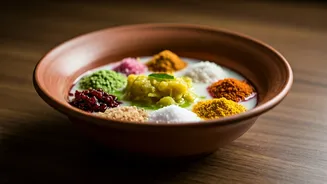
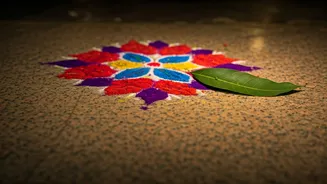
The Ugadi festivities ignite with the pre-dawn 'Abhyanga Snanam,' an oil bath intended to purify the soul, followed by donning new attire. Homes are adorned with vibrant 'torans' made of sacred mango leaves on doorways, believed to invite good fortune and positive energies, alongside intricate 'rangoli' designs gracing the floors. A culinary centerpiece is the 'Ugadi Pachadi,' a unique dish embodying six distinct tastes—bitter (neem flowers), sweet (jaggery), tangy (raw mango), sour (tamarind), spicy (green chilli/pepper), and salty—symbolizing life's varied emotions and experiences. 'Panchanga Sravanam' further involves elders or priests reading out annual astrological predictions concerning rainfall, agriculture, and general prosperity, serving as a spiritual guide for the community.
Cultural Fervor & Feasts
Ugadi transcends mere ritual, serving as a vibrant platform for cultural expression. Traditional poetry recitals are a common feature, especially among Telugu speakers, celebrating the dawn of the new year. The festive spread is rich with traditional delicacies such as 'pulihora' (tamarind rice), 'bobbatlu' or 'holige' (sweet flatbreads), and various mango preparations, capitalizing on the seasonal availability of mangoes. Many also seize this auspicious occasion to seek blessings from deities like Lord Vishnu and Lord Venkateswara at temples, praying for prosperity, good health, and success in the coming year.
The Spiritual Underscore
Beyond its celebratory aspects, Ugadi carries a profound philosophical weight. It encourages introspection on the past year while fostering optimism for the future, reminding observers of life's cyclical nature, encompassing both joy and hardship. The symbolic 'Ugadi Pachadi,' with its blend of tastes, perfectly encapsulates this philosophy: life is a mosaic of emotions, and embracing each experience with equilibrium and resilience is paramount for progress. For countless individuals in Southern India and the global Telugu diaspora, Ugadi is thus far more than a calendar shift; it's a cherished commemoration of renewal, gratitude, and the boundless promise inherent in new beginnings.