





SLS Configuration Shift
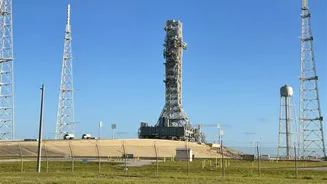
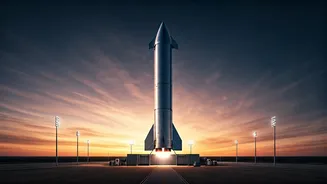
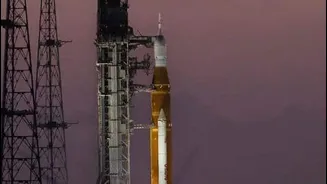
NASA is implementing a notable alteration for the Artemis 3 mission, opting to launch the formidable Space Launch System (SLS) without its standard Interim
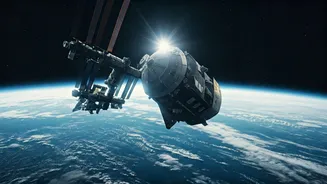
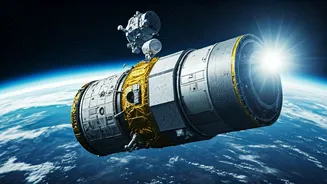
Cryogenic Propulsion Stage (ICPS). Instead, a structurally identical but inert "spacer" will occupy this crucial position. This decision is a direct consequence of strategic adjustments to the mission's objectives, fundamentally altering its initial purpose. Originally slated as the inaugural crewed lunar landing of the Artemis program, the mission's focus has now shifted. It will remain in low Earth orbit, serving as a critical testbed for rendezvous and docking maneuvers with prototype lunar landers developed by two private aerospace giants. This orbital rendezvous will allow for essential validation of spacecraft integration and operational procedures before the actual lunar landings commence on subsequent missions.
Revised Mission Objectives
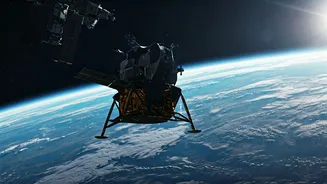
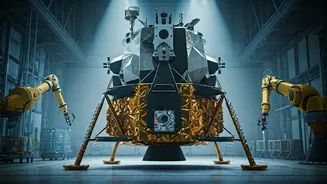
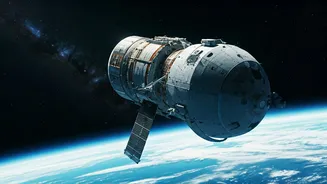
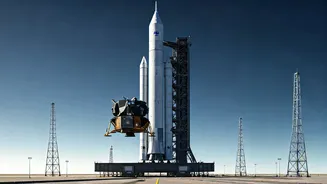
The Artemis 3 mission's fundamental purpose has been redefined. Instead of being the first human expedition to set foot on the Moon, it will now serve as a vital orbital testbed. The primary goal is to meticulously evaluate the capabilities for rendezvous and docking between the Orion spacecraft and the lunar lander prototypes under development by Blue Origin and SpaceX. This strategic pivot allows NASA to gain crucial operational experience and refine procedures in a controlled environment before committing to a lunar landing. While details remain somewhat fluid, there's a possibility that astronauts might even enter at least one of the lander test articles during this orbital phase, further enhancing the learning process and providing invaluable insights for future lunar surface operations.
Upper Stage Evolution
The decision to forgo the ICPS on Artemis 3 has broader implications for the SLS program. NASA has also announced the discontinuation of the Block 1B variant of the SLS, which would have utilized the larger Exploration Upper Stage. This development is partly influenced by the fact that the ICPS, originally derived from the Delta 4 upper stage, is no longer in production. To address this, NASA plans to integrate the Centaur upper stage, currently employed on United Launch Alliance's Vulcan rocket, for use with the SLS starting with the Artemis 5 mission. This transition provides a pathway for future missions while allowing the final ICPS to be preserved for Artemis 4, the planned first crewed lunar landing mission in 2028, offering more time for the Centaur integration.
Orbital Operations
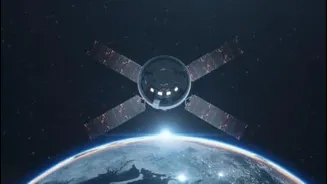
With the absence of the ICPS, the Orion spacecraft will assume responsibility for its own orbital maneuvering. Specifically, it will employ its onboard propulsion systems to achieve a circularized orbit within low Earth orbit. NASA has outlined preliminary parameters for this orbital phase, specifying an altitude of approximately 463 kilometers with an inclination of 33 degrees. This independent orbital circularization capability is a critical test for the Orion spacecraft's systems and demonstrates its autonomy in maneuvering within its operational environment. The success of these maneuvers will be foundational for the subsequent rendezvous and docking operations with the lunar lander prototypes.
Complex Launch Campaign
A significant logistical undertaking for Artemis 3 involves coordinating a multi-launch campaign. This mission marks a first for NASA in its Artemis endeavors, requiring the integration of three separate launches. The SLS will carry the Orion spacecraft into orbit, while two additional launches will be dedicated to sending the lunar lander prototypes into space. This complex orchestration of multiple spacecraft and new capabilities highlights the evolving nature of Artemis operations, demanding meticulous planning and execution to ensure all components converge successfully for the mission's objectives in orbit. This represents a major step forward in managing intricate spaceflight operations.
Future Decisions Pending
Several critical decisions remain outstanding for the Artemis 3 mission. NASA has yet to announce the selection of the astronaut crew who will undertake this pivotal mission. Furthermore, the testing protocols for the new lunar spacesuit, being developed by Axiom Space, have not been finalized. There is also uncertainty regarding the exact launch date, with the mission currently anticipated sometime next year, possibly extending into late 2027, a slight shift from earlier mid-2027 projections. These pending decisions underscore the dynamic nature of the Artemis program and the ongoing refinement of its ambitious goals for lunar exploration.