




The Synthetic Dilemma
Many of our everyday clothes are made from synthetic materials like polyester, nylon, and acrylic, which are essentially plastics derived from fossil fuels.
While these fabrics offer performance benefits, such as water resistance and stretch, making them suitable for athletic wear or rainy conditions, they present significant drawbacks for daily use. Synthetics trap heat and lack breathability, leading to discomfort. Furthermore, their environmental impact is considerable: they can take between 20 to 200 years to decompose in landfills. A more insidious issue is the shedding of microplastics during washing, which pollute our oceans and bypass water filtration systems, contributing to widespread environmental contamination. The reliance on these materials reflects a historical trend in fashion that is now being challenged by a growing movement towards more sustainable and planet-friendly choices.
Tencel: The Eco-Luxe Fiber
Tencel, also known as Lyocell, represents a superior category of modern semi-synthetic fabrics. Its origin is in dissolved wood pulp, typically from eucalyptus trees, positioning it as a luxurious yet eco-conscious choice. This material is celebrated for its remarkable softness, often drawing comparisons to silk, and its elegant drape, which makes it ideal for garments like dresses and bedding. The manufacturing process for Tencel is particularly noteworthy; it employs a 'closed-loop' system where approximately 99% of the water and chemical solvents used to convert wood pulp into fiber are captured and reused. This efficient recycling minimizes waste and resource depletion. Compared to cotton cultivation, which is resource-intensive in terms of water and land, Tencel requires significantly less of both, establishing it as an environmentally commendable fabric choice and a rising star in sustainable textiles.
Linen: Nature's Breathable Classic
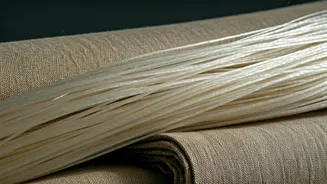
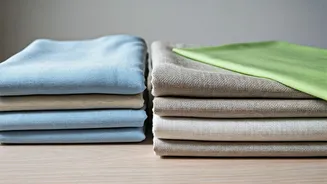
Linen, derived from the flax plant, is a fabric with a rich history spanning thousands of years, enduring due to its inherent qualities and minimal environmental footprint. The flax plant itself is remarkably robust, thriving in less fertile soil and relying primarily on natural rainfall for hydration, thus reducing the need for extensive irrigation. Its cultivation also requires very few pesticides, further enhancing its eco-friendly profile. The primary characteristic of linen, however, is its complete lack of elasticity, which results in its tendency to wrinkle easily. Far from being a flaw, these wrinkles are often viewed as a desirable attribute, signaling the authentic nature of the fabric in the context of sustainable fashion. Linen stands out for its exceptional breathability, making it an indispensable option for comfort in warm climates. Moreover, it is fully biodegradable, meaning that when a linen garment reaches the end of its long life, it decomposes naturally without leaving harmful residues on the earth.
Pima Cotton: Built to Last
While cotton is a beloved natural fiber, conventional cotton farming often involves significant water usage and the extensive application of pesticides. Pima cotton, also marketed as Supima, offers a more sustainable and durable alternative. It belongs to the category of Extra-Long Staple (ELS) cotton, meaning its fibers are considerably longer than those of standard cotton. This extended fiber length contributes to a fabric that is not only exceptionally soft but also remarkably strong and more resistant to wear and tear. Pima cotton's color retention is also superior. The sustainability argument for Pima cotton hinges on its longevity; a Pima cotton garment can endure up to 50% longer than one made from conventional cotton, as it resists pilling and tearing more effectively. This durability embodies the principle of mindful consumption – investing in fewer, higher-quality items that last longer, thereby reducing the frequency of replacement and overall waste.
Making the Smart Choice
When selecting new clothing, paying attention to the fabric composition on the care label is an increasingly important step. For specific needs like athletic apparel or performance gear requiring specialized properties such as water resistance or stretch, synthetic materials still hold a place. However, for the majority of everyday wear, the advantages of natural and semi-natural fibers are compelling. Opt for linen when you need superior breathability in hot weather, choose Tencel for its silken feel and excellent drape, and invest in Pima cotton for enduring pieces that you wish to cherish and wear for many years. Embracing these fabrics not only enhances your personal comfort but also contributes positively to the health of the planet by reducing environmental impact and promoting more sustainable fashion practices.