





The AI First Approach
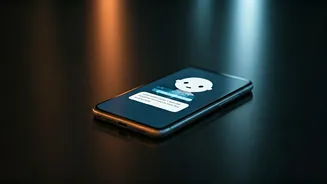
Increasingly, artificial intelligence chatbots are serving as the initial point of contact for a myriad of needs, from clarifying doubts to navigating
personal decisions. This shift is quietly transforming the landscape of human interaction, with experts cautioning that while AI offers undeniable clarity and a sense of control, it might inadvertently encourage withdrawal, fundamentally altering not only our communication methods but also our choice of confidantes. For instance, a 26-year-old IT professional in Delhi finds it more comfortable to query an AI than to approach colleagues, especially in meetings where she experiences hesitation. This AI interaction provides a buffer against perceived awkwardness, offering a solution for avoiding uncomfortable social situations. She doesn't identify as a typical introvert, yet her reluctance to engage with peers has found an easy outlet, diminishing real-world exchanges – a pattern mental health professionals observe as increasingly prevalent in society. Since the advent of ChatGPT in late 2022, these AI tools have transcended their initial role as mere productivity aids, now frequently used for processing emotions, rehearsing conversations, and soliciting advice, effectively stepping into roles once exclusively filled by friends, family, or therapists.
AI's Influence on Communication
Therapists are beginning to observe profound effects on how individuals communicate, noting that many clients arrive for sessions already adopting the 'language of AI.' Psychotherapist Sarthak Paliwal observes that instead of expressing raw emotions or spontaneous thoughts, clients often present a 'sanitized, processed version' of their inner world. This occurs because they have already engaged with an AI system, shaping their narrative into an 'algorithm-shaped' one. Consequently, a significant part of Paliwal's work involves helping these clients re-establish their authentic voices and critically assess their reliance on algorithm-driven interactions. This creates a situation where individuals bring a pre-digested version of their feelings to therapeutic settings. The integration of AI into daily routines can be gradual, as exemplified by Anjali Chandak, a 24-year-old communications professional. Initially, she didn't intend to use AI daily, but it slowly became an ingrained part of her routine, to the point where she now spends over 10 hours daily interacting with ChatGPT. It serves as her primary space for processing ideas, practicing conversations, and drafting messages before engaging with others. The primary allure, she notes, is the AI's non-judgmental and pressure-free environment, free from the immediate need to respond, the fear of criticism, or the concern of imperfection. This preparation leaves her feeling more composed and less overwhelmed when she does communicate with people.
Comfort, Avoidance, and Isolation
The sense of relief derived from sidestepping social discomfort, according to psychiatrist Dr. Deeksha Kalra, has the potential to reinforce tendencies towards withdrawal. AI chatbots can inadvertently bolster behaviors associated with introversion or social avoidance by offering an escape from uneasy social scenarios, thereby creating a cycle of negative reinforcement. Dr. Kalra distinguishes between mere discomfort and a clinical disorder, emphasizing that introversion itself is not inherently pathological; introverts often function well in social settings but simply favor solitude. The concern escalates when AI transforms from a supplementary tool into a complete substitute for human connection, particularly for individuals already inclined towards avoidance or social withdrawal, enabling them to retreat further into their own space. Paliwal highlights that a significant aspect of AI's appeal lies in its lack of social repercussions. Unlike human interaction, which might involve judgment or the formation of opinions, AI offers unconditional acceptance for both logical and illogical thoughts. This characteristic draws users who find human interactions unpredictable or draining. However, this reliance carries risks, especially for those with social anxiety, as heavy engagement with chatbots can reinforce avoidance behaviors. These platforms have become a primary avenue for venting, seeking validation, and obtaining information, areas previously requiring interaction with other humans. Emerging research suggests these behavioral shifts could exacerbate 'psychotic symptoms.' A 2026 study by Harvard Medical School flagged a potential for AI chatbots to intensify or influence psychotic symptoms, particularly in vulnerable individuals, by mirroring, validating, and amplifying delusional thinking due to their typically agreeable design. Reports suggest interacting with ChatGPT could even lead to religious delusions of grandeur.
Concerns and Counterarguments
Not all users find the AI experience entirely reassuring. One finance professional from Pune shared an instance where AI's limitations became apparent when using Duck.AI, a privacy-focused chatbot. Despite receiving considerate responses, the interactions consistently ended with further questions, leading to discomfort. A significant concern was the potential for the AI to misuse disclosed information, perhaps to manipulate emotionally vulnerable individuals. While such concerns are understandable, experts like Dr. Srinivas Padmanabhuni, CTO at AiEnsured, point to the broader risks of data misuse. While direct manipulation through personal disclosures remains a grey area, the potential for data exploitation is substantial. This spectrum of risk ranges from conversations being used for model improvement to more severe scenarios like targeted phishing or the creation of deepfakes. Personal information and inferred behavioral patterns could be leveraged for deception, emotional influence, financial loss, identity theft, or reputational damage. Conversely, some argue that AI is not isolating individuals but is, in fact, refining their interactions. Shyam Arora, CEO of Meon Technologies, believes AI is enhancing the meaningfulness of human interactions by removing unnecessary friction. He observes that while the frequency of his interactions hasn't changed, their depth has increased. Arora contends that AI facilitates faster information processing, allowing discussions to focus more on decision-making rather than basic consensus building. He notes that meetings now require less time for bringing everyone up to speed, as participants arrive better prepared, thereby improving collaboration quality. Arora maintains that AI 'clears the clutter' but does not replace human expression, asserting that leadership communication relies on conviction, which is best conveyed through genuine human exchange. Ekta Saxena, founder of OpinionsAndYou magazine, sees AI integrating into various life aspects for tasks like brainstorming and reducing drudgery, though she avoids it for core writing. She has observed its presence in personal communication, from meal planning to social messaging, noting friends using AI for congratulatory messages. This convenience prompts a crucial question about authenticity when machines begin drafting personal communications.
The Future of Connection
Ultimately, whether AI amplifies introversion is less about inherent personality traits and more about how individuals incorporate these technologies into their daily routines. For some, AI serves as a practice ground, enhancing their ability to communicate effectively with others. For others, it risks becoming a comfortable, albeit isolating, substitute for genuine human engagement. Psychologists emphasize that introversion is not about avoiding people but rather about preferring environments that facilitate introspection and controlled social exchanges. Paliwal views this as a societal challenge as much as a technological one, noting that human conversations inherently involve disagreement, vulnerability, and emotional nuances that algorithms cannot fully replicate. As AI becomes more deeply embedded in our lives, the critical question shifts from whether people will converse with machines—which they undeniably are—to how these digital dialogues will fundamentally reshape the way humans communicate with one another.