

The Art of Bhakri
Neena Gupta, known for her appreciation of home-style cooking, recently unveiled her attempts at mastering Maharashtrian Bhakri on Instagram, highlighting
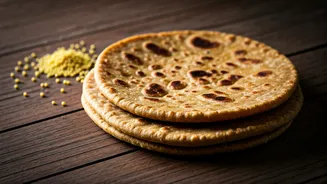
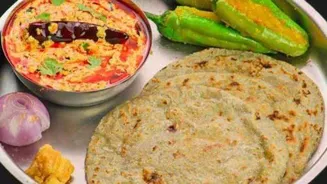
it as a culinary art form she is actively learning. This traditional flatbread, often a staple in Indian households, requires a specific touch and technique to achieve its characteristic texture. Gupta's engaging video showcased her dedication to this craft, aiming for a bhakri that was not only delicious but also perfectly round and satisfyingly crisp. Her willingness to share her learning process adds a personal and relatable dimension to the recipe, encouraging others to try their hand at this wholesome dish. The focus here is on the learning curve and the inherent beauty found in perfecting a traditional cooking method, demonstrating that even seasoned individuals embrace continuous culinary discovery.
Dough Preparation Techniques
The foundation of a good bhakri lies in its dough, and Neena Gupta meticulously demonstrated this crucial step. She began by combining a blend of flours, including jowar, bajra, ragi, and rice flour. The key to achieving the right consistency, as shown in her demonstration, is the use of boiling hot water. This technique helps to gelatinize the starches in the flour, resulting in a firmer, more pliable dough that is easier to handle. Gupta then expertly kneaded this mixture until a smooth, firm ball was formed. She divided the dough into small portions, each intended for a single bhakri, underscoring the importance of portion control for uniform cooking. This careful attention to the initial dough stage is vital for the final texture and shape of the bhakri.
Shaping and Flattening
Transforming the dough ball into a perfect bhakri requires a gentle yet firm hand, a skill Neena Gupta is actively honing. She started by flattening one of the dough balls on her palm. To prevent sticking and ensure a smooth finish, she strategically sprinkled a bit of 'atta' (whole wheat flour) onto a plate. The dough was then carefully patted and flattened outwards with her hands, gradually expanding it into a round shape resembling a roti. The emphasis was on a gentle, even pressure, avoiding any tearing or uneven thickness. This manual shaping technique is central to traditional bhakri making, allowing for control over the final diameter and thickness, which directly impacts how the bhakri cooks and its resulting crispiness.
Cooking and Finishing Touches
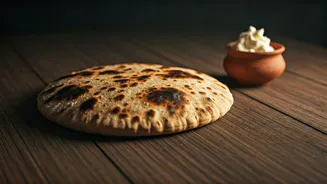
Once shaped, the bhakri moves to the heat of the 'tawa' (griddle). Neena Gupta placed her preheated tawa on the stove and carefully laid the flattened bhakri onto its surface. A crucial step she highlighted was applying room-temperature water evenly across the uncooked side of the bhakri immediately after placing it on the tawa. This water application helps in steaming the bhakri initially, promoting even cooking and a softer texture before it crisps up. After cooking one side, she skillfully flipped it to cook the other. Throughout the cooking process, she used a spatula to gently press the edges, encouraging the bhakri to puff up slightly. The goal was to achieve a beautiful golden-brown hue with delightfully crispy edges, indicating it was perfectly done. Finally, she transferred the cooked bhakri onto a white cloth, made a small incision in the center, and generously added desi ghee, followed by spreading more ghee over the entire surface for enhanced flavor and richness.