




Murud Janjira Fort
Standing majestically amidst the Arabian Sea, Murud Janjira Fort is a testament to incredible Maratha engineering and resilience. Believed to have withstood
countless attacks, this sea fort was once considered virtually impregnable. Legends speak of its immense canons, so powerful their reverberations could be felt for days. Inside, the fort housed large granaries and freshwater wells, capable of sustaining the 550 families who once resided within its formidable stone walls and turrets. Designed by the Siddis, it was strategically equipped with cannons to deter any approaching threats. Today, the fort is a popular destination, easily reached by boat from Rajapuri jetty, offering a captivating glimpse into India's maritime history and a feasible day trip from Mumbai and Pune.
Rabdentse Ruins, Sikkim
Explore the evocative Rabdentse Ruins, once the second capital of Sikkim, offering a poignant look into the kingdom's royal past. Established in the 1670s by Tensung Namgyal, it served as the royal seat until its destruction by invading Gurkha forces in the 18th century. The Archaeological Survey of India has since meticulously restored the site, enhancing it with serene gardens and pathways. Situated near Pelling, a 2km hike from the significant Pemayangtse Monastery brings visitors to these historical grounds. Within the ruins, one can find remnants of Buddhist shrines, a royal throne, and an open quadrangle. The site's most captivating feature is a remarkable 7-foot-long white marble slab, believed to have been the location of the Risum Gompa monastery, continuing to draw visitors and locals alike.
Unakoti's Rock Art
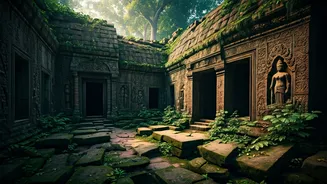
Venture to Unakoti in Tripura, an enigmatic site renowned for its captivating rock carvings and sculptures that fuel fascinating local legends. One myth suggests Lord Shiva, accompanied by nearly a crore of gods and goddesses, turned his companions to stone when they failed to awaken before dawn for their pilgrimage. Another tale attributes the creation to an artisan, Kallu Kumhar, who was tasked with carving a multitude of figures overnight. The name 'Unakoti' itself signifies 'one less than a crore,' reflecting this legend. The site features numerous rock carvings, prominently including a towering 30-foot depiction of Shiva, alongside carvings of Ganesha, Durga, Ganga, Hanuman, and Ravana. Recognized for its cultural significance, Unakoti was added to the UNESCO World Heritage Site tentative list in 2022.
Masrur Temples
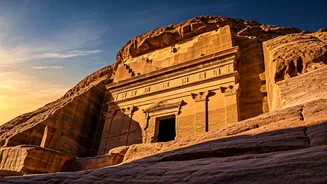
Discover the Masrur Temples in Himachal Pradesh, an 8th-century complex of rock-cut Hindu temples believed to have been carved from a single monolithic rock. This architectural marvel is arranged symmetrically on a square grid, with the central temple surrounded by smaller ones. Archaeological findings suggest the original plan was far more extensive, with much of the complex left unfinished. The history and architects behind these temples remain somewhat obscure, but local legend connects them to the Pandavas of the Mahabharata, who are said to have attempted to build a stairway to heaven here during their exile. Visitors can still observe an unfinished stairway at the site, adding to its mystical allure.
Dhanushkodi, Tamil Nadu
Journey to Dhanushkodi, a poignant ghost town on Pamban Island in Tamil Nadu, frozen in time since a devastating cyclone in 1964 reduced it to ruins. Today, the remnants of churches, a railway station, and homes are slowly being embraced by the sand and sea. Situated on a narrow strip of land between the Bay of Bengal and the Indian Ocean, the atmosphere is both desolate and deeply moving. Local lore connects Dhanushkodi to the Ramayana, suggesting it was the site where Lord Rama constructed his bridge to Lanka. Once a vital transit point for travelers heading to Sri Lanka via ferry, the town is now more accessible thanks to a road built in 2016, replacing the arduous journey along the shoreline.
Champaner-Pavagadh Park
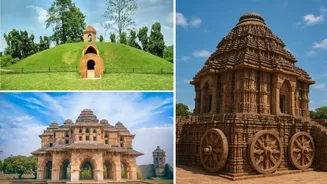
Explore the Champaner-Pavagadh Archaeological Park in Gujarat, a vast UNESCO World Heritage Site encompassing ruins of a pre-Mughal city spread across 3,280 acres, from Pavagadh hill down to the city. This area was a significant Hindu capital in the early 14th century before being conquered by Turkish ruler Sultan Mehmud Begda. The site's structures beautifully showcase a fusion of Hindu and Muslim architectural styles, with the Jama Masjid serving as a model for subsequent mosque designs in India. The Kalikamata Temple, perched atop Pavagadh Hill, continues to attract pilgrims annually, making this site the sole complete and unaltered example of an Islamic pre-Mughal city.
Shalimar Bagh, Kashmir
Experience Shalimar Bagh in Kashmir, a magnificent 17th-century Mughal garden built by Emperor Jahangir for his wife, Nur Jahan, serving as their summer retreat. This garden, set along the tranquil Dal Lake, is a supreme example of Mughal garden artistry, featuring a terraced layout inspired by the Persian charbagh style. A central water channel, the Shah Nahar, elegantly connects three terraces, adorned with cascading fountains, black marble pavilions, chinar tree-lined paths, and formal walkways. Each terrace was designed for a specific purpose, from public gatherings at the Diwan-e-Aam to more private royal quarters. Historically, the garden boasted over 400 fountains powered by an intricate water system. The uppermost terrace, a secluded area for the royal family, includes the zenana garden and the Black Pavilion. Behind many of the waterfalls, arched niches known as chini khanas once held oil lamps, casting a magical glow through the falling water.