






Ice Class Explained
When planning an expedition cruise, particularly to polar regions, understanding a ship's 'Ice Class' rating is paramount. This maritime classification
isn't just a technicality; it's a key determinant of the vessel's capabilities and, consequently, the guest experience. Ice Class signifies that a ship is engineered and reinforced to safely traverse waters laden with ice, such as those found in polar and high-latitude environments. The core criteria for these classifications encompass the ship's hull strength and its reinforcement against ice impact, the power and protection of its propulsion systems, its agility when maneuvering through ice, and its overall capacity to operate securely when encountering the immense pressure and diverse types of ice. Furthermore, critical safety systems, including life-saving equipment and fire-fighting apparatus, are specifically designed and certified to function reliably in extreme cold and remote locations, ensuring guest safety even in the harshest conditions. This rigorous certification process ensures that expedition vessels are truly equipped for the challenges of polar exploration, far beyond what standard cruise ships can manage.
Decoding Polar Class
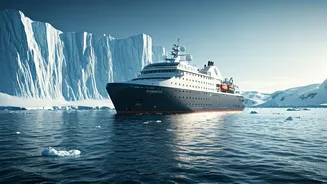
The most widely recognized system for classifying ice-strengthened vessels is the Polar Class (PC) rating, overseen internationally by the International Association of Classification Societies (IACS). This system categorizes ships into seven distinct levels, ranging from PC7, representing the lowest ice capability, to PC1, signifying the highest. For instance, a vessel with a PC2 rating, like Ponant's Le Commandant Charcot, possesses the ability to operate year-round in moderate, multi-year ice conditions, allowing access to exceptionally remote destinations. Other notable ships, such as Lindblad Expeditions' National Geographic Endurance and its sister ship National Geographic Resolution, boast a PC5 classification, enabling them to navigate medium first-year ice throughout the year. Many popular expedition ships in Antarctic waters, including Scenic Eclipse II, Viking Octantis, Viking Polaris, Silversea's Silver Endeavour, Seabourn Venture, HX Expeditions' MS Roald Amundsen and MS Fridtjof Nansen, and Quark Expeditions' Ultramarine, operate under a PC6 rating, a robust classification for extensive expedition cruising. It's important to note that mainstream cruise lines venturing to Antarctica often do so on ships that are not purpose-built for these demanding icy environments.
Impact on Experience
The Polar Class rating of an expedition ship profoundly influences how you experience destinations like Antarctica, rather than determining if you can visit at all. Vessels with higher Polar Class ratings empower captains to venture into more remote areas where wildlife is abundant and active, facilitating a greater number of landing opportunities. These ships also possess a superior ability to adapt quickly to the constantly changing ice conditions encountered throughout the day. When unexpected weather or ice flows necessitate a change of plans, higher-rated Polar Class ships are often better equipped to stick closer to the original itinerary. Conversely, vessels without ice-class ratings, often categorized as 'scenic' or 'cruise-only' by industry bodies, typically must remain in safer waters, unable to access more remote sites or conduct landings with the same ease as their ice-rated counterparts. This distinction is crucial for travelers seeking a truly immersive expedition experience.
Trade-offs and Choices
Opting for a ship with a high Polar Class rating does come with certain trade-offs. These vessels are typically smaller, often accommodating only a couple of hundred passengers, which can mean fewer public spaces or a more limited selection of onboard amenities like restaurants compared to larger, conventional cruise ships. A significant consideration is that the robust hull reinforcement necessary for ice navigation can sometimes lead to increased noise and vibration. Additionally, these ships tend to travel at slower speeds, though this can be a benefit, allowing for more prolonged and immersive enjoyment of the surrounding scenery. Ultimately, the choice of vessel depends on individual priorities. Some travelers seek a luxurious cruise with an expedition element, while others desire a deeply expedition-focused adventure, including activities like overnight camping on the ice or kayaking amidst abundant marine life. The decision boils down to whether one prefers a luxury-forward expedition cruise or an expedition-forward luxury cruise, with the ship's ice class playing a pivotal role in defining that experience.