





The Salt Overload
In India, salt is a ubiquitous ingredient, frequently added to daily meals without a second thought. However, current consumption patterns reveal a concerning
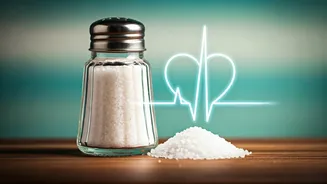
trend: the average Indian consumes between 8 to 11 grams of salt daily, which translates to 3.2–4.4 grams of sodium. This figure is nearly double the World Health Organization's (WHO) guideline, which recommends a maximum of 5 grams of salt (equivalent to 2 grams of sodium) per day. This excessive salt intake is a primary driver of hypertension, a condition that substantially elevates the risk of cardiovascular diseases, a leading cause of mortality across the nation. In response to this escalating health crisis, leading specialists in clinical medicine, public health, and nutrition are strongly advocating for a practical and accessible intervention: the adoption of potassium-enriched low-sodium salt substitutes. These specially formulated salts aim to reduce overall sodium consumption while simultaneously boosting potassium intake, a vital mineral that plays a crucial role in blood pressure regulation. The key advantage of this approach lies in its minimal disruption to established dietary habits, offering a powerful tool for cardiovascular protection.
Potassium's Protective Role
The detrimental effects of high sodium intake on blood pressure are well-documented, but the complementary role of potassium in mitigating these effects is equally significant, though often overlooked. In India, potassium consumption frequently falls below optimal levels, creating a critical imbalance. With a striking 80% of the sodium consumed originating from salt added during home cooking, experts emphasize that strategically reducing salt use in this context offers the most impactful pathway to a healthier population. Low-sodium salt substitutes are designed to address this dual challenge. Typically composed of 70–75% sodium chloride and 25–30% potassium chloride, these substitutes effectively decrease sodium intake while increasing potassium intake. This deliberate alteration in mineral balance is instrumental in lowering blood pressure and, consequently, reducing the overall risk of cardiovascular events.
Expert Endorsements
Leading medical professionals are vocal in their support for low-sodium salt substitutes (LSSS). Professor Ambuj Roy from AIIMS, New Delhi, likens LSSS to a 'dietary vaccine' for hypertension, highlighting the robust scientific backing for its benefits. He emphasizes that LSSS represents a 'low-hanging fruit' in cardiology – a passive yet highly effective intervention providing continuous cardiovascular protection without requiring patients to compromise on the taste of their beloved traditional dishes. Echoing this sentiment, Professor Vivekanand Jha of The George Institute for Global Health India, points to extensive research demonstrating LSSS's efficacy in reducing adverse cardiovascular outcomes. He notes that India's prevalent high sodium and low potassium intake is a significant contributor to hypertension and heart disease, a problem LSSS directly tackles. He asserts that with appropriate safeguards and no change in taste, LSSS presents a safe and scalable solution crucial for India's non-communicable disease prevention strategy. Dr. Meenakshi Sharma, formerly with ICMR, suggests that to maximize the impact of LSSS, dedicated clinical trials are needed in high-risk groups. She also advocates for modeling studies to assess the benefits, risks, and trade-offs across diverse populations, along with cluster and qualitative research to refine delivery methods.
Proven Efficacy in Trials
The effectiveness of potassium-enriched low-sodium salt substitutes (LSSS) has been substantiated through rigorous research. A notable randomized controlled trial conducted in rural India in 2021, involving adults diagnosed with hypertension, reported a significant reduction of 4.6 mm Hg in systolic blood pressure among participants who used LSSS. Further bolstering these findings, a large-scale cluster randomized trial in China, which tracked over 21,000 individuals for more than five years, observed substantial decreases in stroke incidence (by 14%), major cardiovascular events (by 13%), and overall mortality (by 12%) in populations utilizing potassium-enriched LSSS. Projections from modeling studies indicate that if LSSS were adopted nationwide in India, it could potentially prevent between 8% and 14% of cardiovascular deaths annually, underscoring its profound potential for population-level health improvement.
Potassium Safety Profile
Experts address potential concerns regarding potassium intake from these salt substitutes, reassuring the public about its safety for the vast majority. Potassium is generally well-tolerated, even by many individuals in the early stages of kidney disease. Caution is primarily advised only for those in advanced stages of kidney disease or individuals whose potassium levels are already elevated. Dr. Sandeep Mahajan, a Nephrology Professor at AIIMS, New Delhi, emphasizes that the potential risks associated with LSSS are often overstated when weighed against their broad public health benefits. He clarifies that the small subset of patients requiring careful monitoring—particularly those with advanced kidney issues or on specific medications—can be easily identified through simple screening and clear labeling. With appropriate advisories and enhanced public awareness, Dr. Mahajan estimates that nearly 90% of the population can safely leverage the advantages of LSSS. The critical challenge now, he argues, is to overcome 'therapeutic inertia' among both healthcare providers and the general public to facilitate the widespread adoption of this highly effective strategy for cardiovascular risk reduction.
Integrating into Food Systems
To maximize the reach and impact of low-sodium salt substitutes (LSSS), integration into national feeding programs and institutional kitchens is a critical step. Dr. Sailesh Mohan, Deputy Director at the Centre for Chronic Disease Control, Delhi, proposes that government support for public procurement of LSSS for school mid-day meals, Integrated Child Development Services (ICDS), Public Distribution System (PDS) rations, hospital kitchens, railways, and large institutional canteens could rapidly build volume and normalize its use. Furthermore, he suggests that food industry reformulation policies should mandate the partial replacement of sodium chloride with potassium salts in packaged foods and restaurant meals. This approach is particularly crucial for high-salt food categories such as snacks, instant mixes, and condiments, where reformulation can significantly reduce overall population sodium intake without compromising consumer appeal.