




Boosting In-Flight Speeds
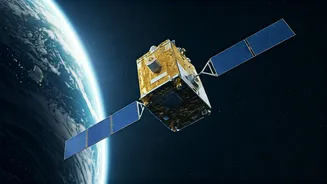
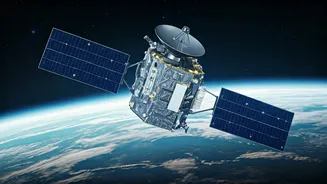
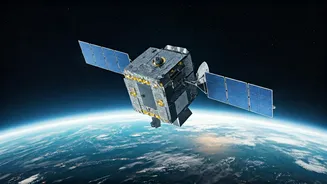
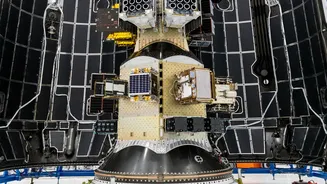
SpaceX's Starlink is making significant strides in delivering high-speed internet to aircraft, with recent announcements indicating that their latest satellite
terminals are capable of reaching peak speeds of up to 1 gigabit per second. This advancement represents a substantial leap from previous performance metrics. While a widely cited figure for in-flight performance stands at 220 megabits per second, it's important to understand that this number reflects actual shared usage. The more advanced terminals, however, leverage dual-channel technology to achieve much higher peak potential. Rival services sometimes advertise their maximum theoretical speeds as their standard performance, whereas Starlink aims to provide figures based on automated testing reflecting real-world capabilities. This enhanced capacity is particularly crucial for larger commercial aircraft, where more resources can be dedicated to ensure a robust internet experience for all passengers.
Regulatory Tailwinds
The expansion of Starlink's services, especially for aerial applications, is receiving a boost from regulatory changes. The Federal Communications Commission (FCC) has introduced new rules that could dramatically increase the overall capacity of Starlink's satellite constellation, potentially by as much as seven times. These updated regulations address spectrum sharing for non-geostationary satellite operators, a category into which Starlink firmly falls. This regulatory environment is highly favorable for the company's growth trajectory. Furthermore, Starlink has already secured partnerships with prominent flight operators, including Virgin Atlantic and United Airlines. Discussions are also reportedly underway with American Airlines Group to integrate Starlink's satellite internet service, signaling a strong industry interest in adopting this advanced connectivity solution.
Future Orbital Vision
Beyond enhancing in-flight connectivity, SpaceX's broader ambitions involve transforming space exploration and utilization. The company's foundational principle of reusable rockets is central to its vision of enabling humanity to become a multiplanetary species, with technologies planned to surpass even the capabilities of historical rockets like NASA's Saturn V. This long-term vision is intertwined with discussions surrounding SpaceX's potential initial public offering (IPO) and the compensation package for its CEO. Reports suggest a significant stock award for the CEO tied to ambitious company valuations and the deployment of substantial AI computing power in orbit. The company's dual-class share structure, intended for an IPO, would also ensure that the CEO's leadership position remains firmly under his own control, underscoring the company's strategic direction and governance.