





Solar Storm No Threat
A recent, exceptionally strong solar flare, classified as an X1.4-class event, erupted from a busy sunspot late Sunday, causing temporary radio disruptions
over parts of Asia and Australia. This powerful outburst also propelled a coronal mass ejection (CME), a massive expulsion of solar plasma, towards Earth. However, NASA officials have reassuringly stated that this space weather phenomenon will not interfere with the upcoming Artemis 2 mission, which is slated to send astronauts on a journey around the moon. The space agency's Associate Administrator, Amit Kshatriya, explicitly mentioned during a press conference that they anticipate no adverse effects from the CME on the mission's operations. This proactive assessment underscores NASA's commitment to astronaut safety and mission integrity, ensuring that even significant solar activity is carefully monitored and accounted for before critical launches. The mission management team has officially given the green light, confirming that all systems are go for the April 1st launch.
Mission Go-Ahead
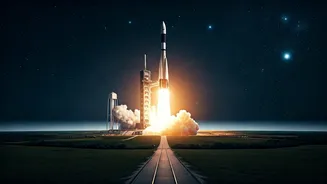
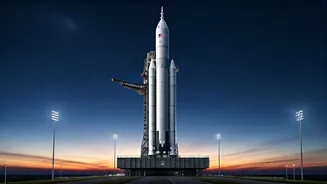
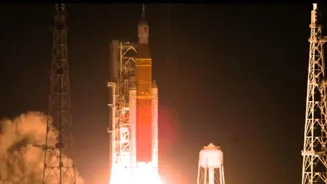
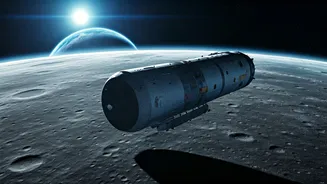
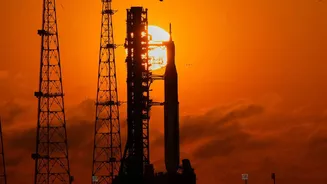
With the solar weather forecast clear of significant threats, NASA's Artemis 2 mission management team has officially sanctioned the launch attempt for April 1st. The designated liftoff time is set for 6:24 p.m. EDT (2224 GMT). This decision follows a thorough evaluation of all mission parameters and readiness checks. Associate Administrator Amit Kshatriya conveyed the team's confidence, stating that "everything continues to look good and there are no issues preventing us from pressing ahead at this point." This confirmation alleviates any concerns regarding external space weather conditions, allowing the mission to proceed as planned. The Artemis 2 mission marks a significant milestone as the first crewed lunar flyby since 1972, utilizing the advanced Space Launch System (SLS) megarocket and Orion spacecraft for a 10-day orbital tour of the moon.
Safety Protocols
While the current solar flare poses no immediate risk, NASA has robust safety protocols in place for space radiation, a known hazard for astronauts and satellites. The Artemis 2 mission, for instance, includes a planned test of a space radiation shelter. Flight director Emily Nelson highlighted this objective, explaining that the crew will practice setting up this designated safe zone within the spacecraft. This shelter is designed to protect the astronauts by providing a shielded area to retreat to during periods of elevated radiation. This proactive measure ensures the crew's well-being, even if unexpected space weather events were to occur. The Artemis 2 mission itself is a pioneering step, sending a crew of four astronauts, commanded by Reid Wiseman and piloted by Victor Glover, alongside mission specialists Christina Koch and Jeremy Hansen, on an exciting 10-day journey around the moon, a testament to continued human exploration.
Crew and Outlook
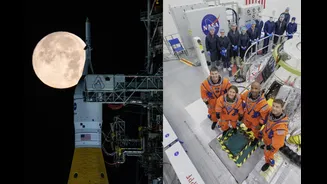
The Artemis 2 crew, consisting of veteran astronauts Reid Wiseman (Commander), Victor Glover (Pilot), Christina Koch (Mission Specialist), and Jeremy Hansen (Mission Specialist from the Canadian Space Agency), has arrived at the Kennedy Space Center and is currently in prelaunch health quarantine. They recently visited the launch pad, capturing a commemorative photo with their powerful SLS rocket and Orion spacecraft. The astronauts are preparing for their 10-day lunar voyage, a crucial step in NASA's ambitious Artemis program. Anticipation is high for a successful launch, with meteorologists forecasting a favorable 80% chance of good weather conditions for the April 1st liftoff. The mission represents a significant return to human lunar exploration and will test new technologies and operational procedures for future missions to the moon and beyond.